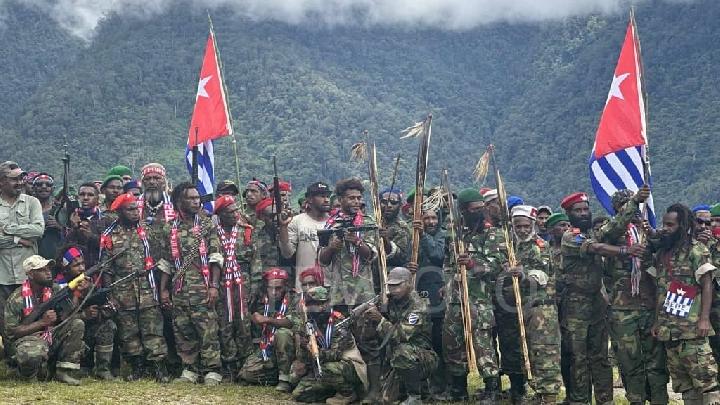
An American pilot has been killed in West Papua after fighters from the West Papua National Liberation Army (TPNPB) attacked and burned a civilian aircraft in Indonesia’s Highland Papua province.
TPNPB spokesperson Sebby Sambom identified the pilot as Nicholas F. Gosselin and said the aircraft had been targeted because it had been “frequently dropping Indonesian military personnel and violating the TPNPB’s ultimatum”. Indonesian authorities confirmed that an aircraft carrying an American pilot and seven Papuan passengers had been found burned in Yahukimo, although they had not confirmed the circumstances surrounding the pilot’s death at the time of reporting.
Sambom described the attack as a message to both Jakarta and Washington for “failing to address the root causes of the conflict in Papua between the Indonesian military and the West Papua National Liberation Army”. He warned that further attacks would follow if aircraft continued entering areas under rebel control.
The aircraft belonged to PT AMA, a company that operates flights carrying food, fuel and mail to remote Papuan communities. Indonesian officials said all seven passengers were Papuans.
Western media routinely presents incidents like this as isolated acts of violence by “separatist rebels”. In reality, they’re taking place within one of the world’s longest-running anti-colonial struggles.
West Papua has been under Indonesian occupation since 1963, after the Netherlands transferred administration under the US-backed New York Agreement. Although Papuans were promised the right to determine their own future, they were excluded from the negotiations that decided the territory’s fate.
Six years later came the so-called Act of Free Choice. Rather than allowing the entire population to vote, Indonesia selected just 1,026 representatives, many of whom later described being threatened and intimidated into unanimously supporting integration with Indonesia. For many Papuans, it remains the “Act of No Choice”.
Since then, armed resistance has continued almost continuously.
The conflict has been accompanied by decades of military repression. Human rights organisations and UN experts have documented extrajudicial killings, torture, arbitrary detention, village destruction, forced displacement and severe restrictions on political activity. Estimates put the number of West Papuans Indonesia has killed since the occupation began between 100,000 to more than 500,000 people, though precise figures remain impossible because of longstanding restrictions on independent access to the territory.
Many legal scholars and organisations, including Genocide Watch and researchers at Yale Law School, have argued that Indonesia’s actions meet the legal definition of genocide.
None of this is accidental. West Papua is extraordinarily rich in natural resources, including vast reserves of gold, copper, timber and natural gas. Some of the world’s largest mining operations are located there, generating enormous profits for Indonesian and foreign capital while many Indigenous Papuans remain among the poorest people in the region.
The occupation isn’t about maintaining Indonesia’s territorial integrity. It’s about preserving control over annexed land, labour and natural resources that generate wealth for the ruling class. Colonial domination creates the conditions for profitable extraction, while military force suppresses resistance whenever those arrangements are challenged.
The occupation has also been reinforced through Indonesia’s transmigration programme, which has encouraged large-scale settlement by people from elsewhere in Indonesia. Alongside the seizure of Indigenous land, this has transformed the territory’s demographics and weakened Papuan political power. Like settler colonial projects elsewhere, demographic change has become another means of consolidating colonial rule.
US support for Indonesia’s control over West Papua likewise reflects imperialist interests rather than any commitment to democracy or self-determination. Washington backed Indonesia’s takeover during the Cold War despite Papuans never being allowed a genuine referendum on independence. Today, strategic alliances and access to valuable resources continue to outweigh concern for the rights of the Indigenous population.
Reporting that focuses solely on this incident with the pilot while ignoring more than sixty years of occupation, repression and colonial violence turns cause and effect on their head.
Anti-colonial resistance doesn’t emerge in a vacuum. It develops because colonial rule leaves people with few other means of defending their land, communities and right to determine their own future. The occupation has endured for more than sixty years not because the world is unaware of what’s happening, but because it serves powerful class interests.
The Indonesian ruling class and its imperialist partners have every incentive to preserve an occupation that guarantees access to West Papua’s immense natural wealth, while workers and Indigenous Papuans bear the cost in blood. That’s why appeals to “peace” that ignore the reality of colonialism ring hollow. There can be no genuine peace while one nation is denied the right to determine its own future. The struggle for liberation in West Papua will end not with the suppression of resistance, but with the end of colonial rule itself.