
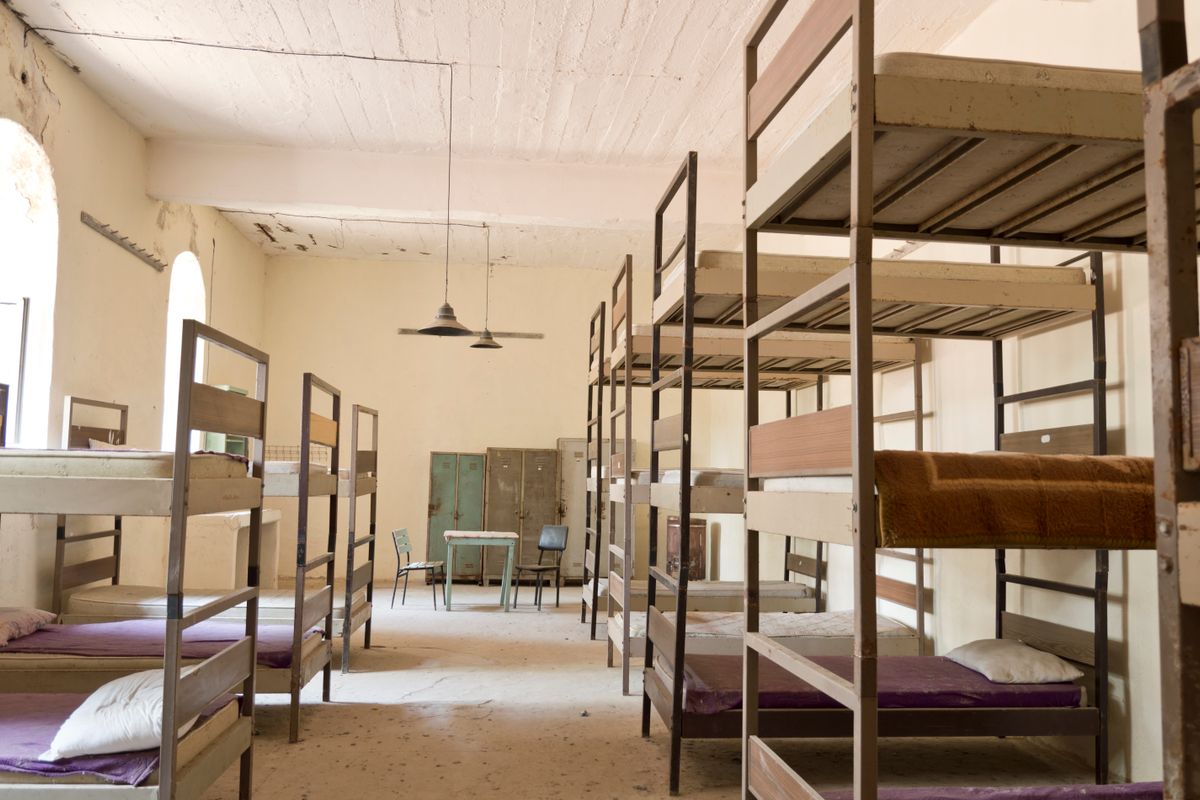
Nearly one in ten probation hostels in England and Wales have been forced to close because of a staffing crisis, exposing yet another fault line in Britain’s crumbling criminal justice system.
The Ministry of Justice has confirmed that nine of the country’s 105 approved premises are currently closed, even as the government prepares to release around 6,000 prisoners early in September. These hostels are designed to house around 2,000 of the highest-risk people leaving prison, providing close supervision during the first weeks after release.
Instead of investing in trained probation workers, officials have admitted they’re increasingly relying on untrained security guards to plug staffing gaps.
Martin Jones, HM inspector of probation, warned that the closures are putting the public at risk.
“Approved premises are the place where the highest risk individuals go after release and it is vital that as many places are there for them and you have to get the right staff in place.
“If you have security guards doing their jobs, there is a big risk of things going wrong and the public being put in danger. The government has to get this right.”
The crisis didn’t appear overnight. According to probation staff, management had at least 18 months’ warning that contracts with private firms Sodexo and OCS were ending, yet failed to recruit enough staff before the transition.
One probation manager said:
“They’ve known this was coming for 18 months, we’ve not been supported to put staffing in place. The closures mean dangerous men don’t get beds, somewhere someone will get hurt because they didn’t get a hostel bed.”
Another worker described the conditions facing staff:
“There is no room for mistakes, you are surrounded by high-risk people, many of whom are trying to harm themselves or others. It is stressful and leads to many staff taking time off with stress-related illnesses.”
A survey by the probation union Napo found that 16 of 21 hostel workers had witnessed security guards carrying out work normally done by trained probation staff.
General secretary Ian Lawrence said:
“We are seeing further closures due to an estate not fit for purpose, lengthy delays in vetting new staff and a badly managed process to bring private provider staff in house.
“Our approved premises estate needs significant investment if it is to provide the very much needed accommodation for high risk of harm people coming out of prison.
“The use of security guards to fill gaps in staffing numbers is totally unacceptable as these people are neither trained nor employed on the basis to work with people on probation.”
Recent inspections have also uncovered major safeguarding failures, including residents at risk of overdose not receiving required welfare checks, failures to follow suicide and self-harm procedures, and faulty CCTV equipment.
The Ministry of Justice defended its record, saying:
“While a handful of premises are temporarily closed, we have increased the total number of beds available in approved premises so we can accommodate more of the highest risk offenders and keep the public safe.
“Approved premises is just one way in which we manage offenders in the community. We have invested a record £700m into probation and community services so we can ramp up tough supervisions on offenders released from custody, including punitive restrictions on their movements and round-the-clock monitoring through tags.”
This crisis isn’t simply the result of poor planning or administrative incompetence. It’s another example of the contradictions built into capitalist governance.
Capitalism has little interest in tackling the social conditions that produce much of the crime it later claims to fight. Poverty, insecure housing, unemployment, untreated mental illness, addiction and social alienation are managed after the fact rather than addressed at their roots. The result is an expanding carceral system that’s expected to contain the consequences of exploitation while being denied the resources needed to function safely.
The staffing crisis also exposes the long-term effects of privatisation. Overnight staffing was contracted out to private companies, only for the transition back into public management to descend into chaos after years of underinvestment and workforce shortages. Workers warned the government well in advance, but their concerns went unanswered until facilities began shutting their doors.
The people paying the price aren’t only probation staff working under impossible conditions. They’re also local communities, and the prisoners themselves—many struggling with addiction, mental illness and other complex needs—who are being pushed through an overstretched system with fewer trained professionals available to support or supervise them.
The crisis serves as another reminder that austerity and market logic don’t produce safer communities. They produce institutions permanently stuck in crisis, where governments respond to systemic failures with temporary fixes, while the deeper social causes remain untouched.