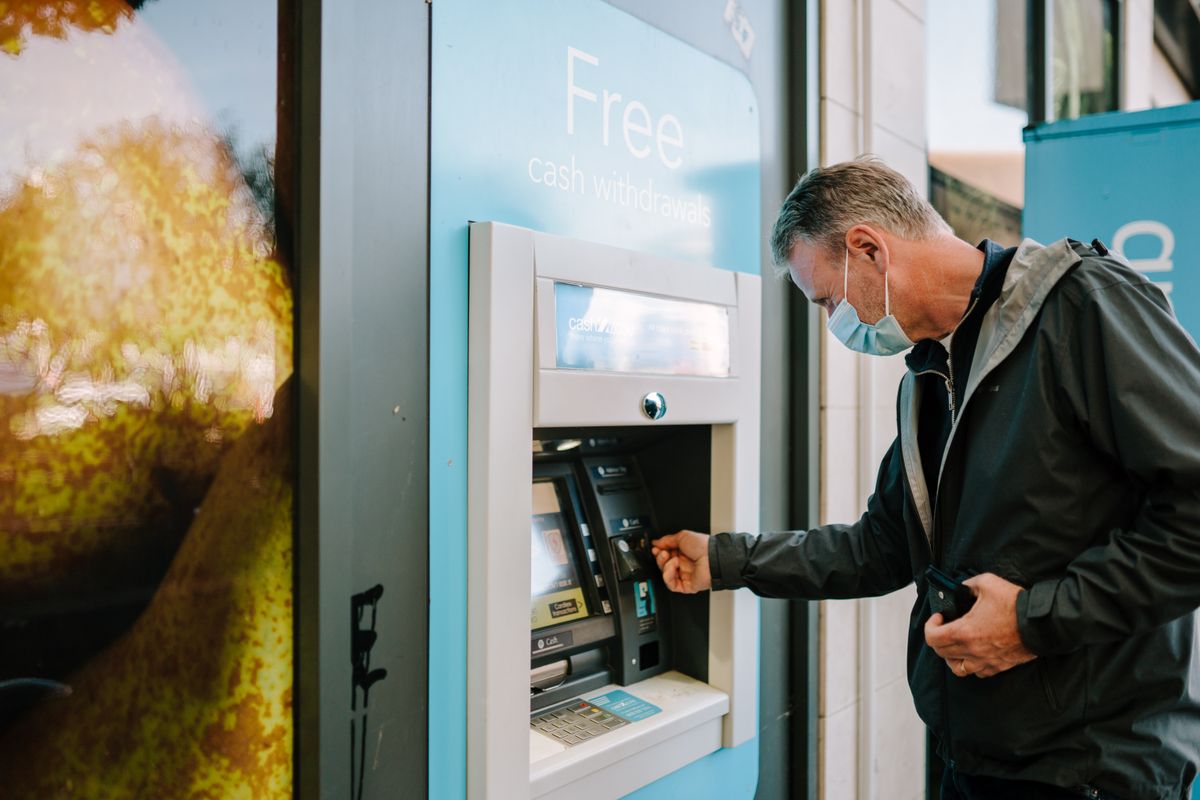
Barclays has reviewed its cash-machine network and announced plans to remove 132 machines across the UK. Among them is the machine at its former premises in Hawes, in the Yorkshire Dales. Without a replacement, Hawes would lose its last free ATM. The inhabitants would still need cash, but the bank would have finished with the business of providing it there.
An independent assessment by LINK has reached the conclusion that Hawes should have a free cash machine. Efforts are now under way to secure one permanently. We have, then, a bank proposing to withdraw a service and a separate assessment establishing that the service is necessary. The town’s need has survived the bank’s review. It now requires somebody to make arrangements for it.
Councillor Yvonne Peacock, a Conservative, described the prospect of losing the free machine as “dreadful, absolutely dreadful”.
“It is 13 miles (21km) to Kirkby Stephen, and 27 (43km) to Richmond, so just where are we going to be able to get cash from?”
An excellent question. The distances acquire a rather different significance according to who must travel them. For somebody deciding which machines belong in a bank’s network, they are distances between places. For somebody who needs to withdraw money, they may become a journey which has to be fitted into the day and paid for. A service can disappear from the bank’s responsibilities while the need for it remains among the inhabitants, together with all the trouble of satisfying that need elsewhere.
This is the sort of economy private enterprise is quite capable of making. If withdrawing a service reduces a company’s expenses, the saving appears in its accounts. The time and money other people must spend as a consequence appear in theirs. Add the two together and the social advantage may look very different. But the bank isn’t organised to add them together. It is organised as a capitalist business, with its own income and expenditure to consider. The inhabitants’ inconvenience becomes a matter for representations, assessments and alternative arrangements.
Nor does the existence of card payments settle the matter. Peacock pointed to places where cards can’t always be used, to the costs businesses incur in accepting them, and to visitors’ need for cash. These are practical objections. A payment method is useful to somebody who can actually use it, in the place where they need to pay. Announcing the existence of another method doesn’t put a usable service into their hands.
There is a lesson here for the small proprietor, too. Ownership of a shop gives its owner no control over the banking network on which the shop depends. The shopkeeper may be thoroughly attached to private enterprise and still have to appeal against the consequences of decisions taken by a much larger private enterprise. The Conservative councillor’s indignation is perfectly understandable. The town’s commercial life requires services which the town’s businesses cannot secure merely by being businesses.
For workers, the dependence is more elementary still. Money earned must be accessible in a form that can be used. Where obtaining cash requires an additional journey, part of the worker’s time and income must be spent simply gaining access to that income. The same journey will weigh differently on people with different resources. A bank’s decision may apply to everybody in a district; everybody doesn’t have the same means of accommodating it.
In Hawes, there are arrangements intended to prevent such an interruption. The office of Rishi Sunak, MP for Richmond and Northallerton and former prime minister, says Barclays has given assurances that the existing machine will remain operational until alternatives are in place. LINK says a replacement should normally be provided within three months of its assessment and should be working before the existing facility closes. Its location hasn’t yet been confirmed.
These details matter. The people of Hawes haven’t already been left without a free machine, and preserving continuous access would be a real benefit. Anybody who treated that benefit as unimportant would have understood very little about the difficulty at issue. Residents need to be able to withdraw money while arguments about the organisation of banking continue.
But observe how many proceedings have gathered around this modest necessity: a bank’s network review, an independent assessment, a councillor’s objections, assurances reported by a former prime minister’s office, and arrangements for a replacement at a location still to be settled. All this concerns the continuation of a service whose necessity is now acknowledged. What an elaborate way of establishing that the inhabitants of a town must be able to get their money!
LINK says the replacement will be funded through its network on behalf of its members. There is consequently a means of organising provision beyond the decision of Barclays alone. The banking institutions can make collective arrangements when a withdrawal leaves a need behind. This is useful, and it also tells us something: the limits of one bank’s chosen network need not determine the limits of the service society receives. Even the proposed remedy requires the matter to be considered on a wider basis.
Barclays also intends to remove machines in Leyburn and Catterick Garrison, where other free ATMs already exist. That distinction must be preserved. Removing one machine where alternatives remain and removing a town’s last free machine have different consequences. Counting the machines removed won’t, by itself, tell us what has happened to people’s access to cash. A serious plan would have to account for where the remaining machines are, whom they serve and what journeys their users must make.
Socialist organisation of banking would begin with precisely these needs. Under social ownership and workers’ control, the banking network could be planned as a common service, with responsibility for maintaining access across the places it serves. Machines could be moved or replaced as circumstances changed; the obligation to provide an adequate service would govern those changes. The expense of maintaining access in a particular town would enter the plan alongside the need it met, rather than leaving that need to be taken up separately when an individual bank proposed to withdraw.
Hawes already has a machine. Its need for one has been recognised. A way of funding a replacement has been identified. The practical means of continuing the service therefore exist. Yet the inhabitants have had to face the possibility of losing it while the necessary arrangements are worked out. Such is their position in relation to a banking system which exercises authority over an everyday condition of their lives: even access to their own money becomes something for which they must make a case.