
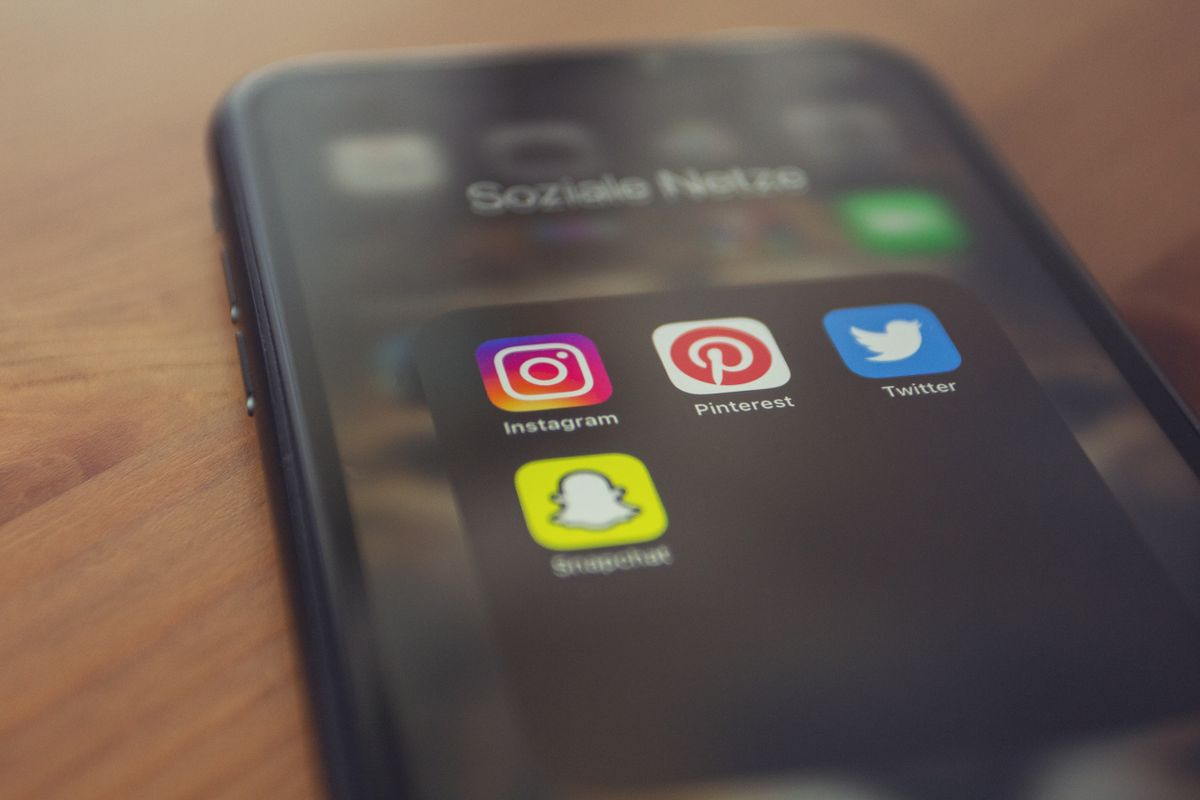
Polling conducted by YouGov has found that 44% of people in Britain support banning under-16s from social media, reflecting growing public concern about the impact of major online platforms on young people’s lives.
The support comes amid mounting evidence of the scale of harmful content reaching children. Recent research found that nearly half of girls and around a third of teenagers had encountered content related to suicide, self-harm, or eating disorders within a single week. Faced with statistics like these, it’s hardly surprising that many people believe stronger restrictions are needed.
For socialists, the answer isn’t to dismiss these concerns. The harms are real. Young people are being exposed to misogynistic abuse, harassment, predatory content, unrealistic beauty standards, self-harm material, and a constant stream of algorithmically selected content designed to keep them engaged for as long as possible.
The question is not whether something should be done. The question is whether the solutions currently being proposed address the root of the problem, and whether they create new problems of their own.
Too much of the debate treats social media as if it were simply a neutral technology that has somehow gone wrong. In reality, the platforms dominating online life today are products of monopoly capitalism. Their purpose isn’t to help people communicate. Their purpose is to generate profit.
The business model is straightforward. The longer users stay online, the more advertising can be sold. The more data that can be harvested, the more valuable users become to advertisers. Every aspect of platform design is shaped by this logic. Recommendation algorithms, endless scrolling, notifications, autoplay features, and engagement-driven feeds all exist because they increase revenue.
Under capitalism, attention itself has become a commodity.
This means that harmful content isn’t merely an unfortunate accident. It emerges from a system that rewards whatever keeps people watching, clicking, sharing, and arguing. Content that provokes fear, outrage, insecurity, or obsession often performs exceptionally well within these systems because it captures attention more effectively than ordinary social interaction.
The result is a generation growing up inside digital environments designed primarily around the needs of capital rather than human development.
This is why proposals such as age restrictions, time limits, curfews, or even a ban for younger teenagers can only ever provide a partial solution. Such measures may reduce exposure to some harms. They may even prove beneficial in specific areas. But they leave the underlying economic structure intact.
The same corporations would continue to operate according to the same incentives. The same algorithms would continue to prioritise engagement. The same profit motive would continue to shape the online environment.
Nor would the costs of a ban be distributed evenly.
For many children, social media is largely a source of entertainment. For others, it serves a far more important function. Disabled children, LGBT youth, migrants, children living in isolated rural areas, and those growing up in hostile or abusive environments often use online spaces to find friendship, community, and support that may not exist in their immediate surroundings.
A cishet teenager living in a major city with a strong friendship group, supportive family, and access to clubs and activities is not in the same position as a disabled child confined largely to their home, or a queer teenager who knows nobody else like them in their local area. Any policy that restricts access to online spaces will inevitably affect these groups differently.
This matters because the rise of social media has coincided with the long-term erosion of the institutions that once helped young people build social connections offline.
At the same time, policymakers increasingly recognise that the problem extends beyond social media itself. The government’s plans to expand after-school activities acknowledge a reality that often gets overlooked in public debate: young people need meaningful alternatives.
For decades, youth services, libraries, community facilities, and recreational spaces have faced cuts or neglect. Many working-class communities have seen the institutions that once provided opportunities for social life steadily eroded. Youth clubs have closed. Public spaces have been commercialised. Local authority budgets have been slashed. The places where previous generations met friends, developed interests, and built community have been hollowed out.
The result is a generation that is often more isolated than those that came before it.
In that context, social media didn’t replace thriving community life. In many cases, it filled a vacuum left by its decline. Millions of young people are spending large portions of their social lives online not because digital communication is inherently superior, but because the material infrastructure of social life has been systematically dismantled.
This doesn’t mean social media should be left unregulated. Quite the opposite. The evidence increasingly demonstrates that allowing giant technology corporations to police themselves has failed.
But we should be wary of narratives that place responsibility primarily on children, parents, or individual behaviour. The crisis facing young people online is not fundamentally the result of poor personal choices. It is the predictable outcome of a system that subordinates every aspect of social life to the pursuit of profit.
The popularity of an under-16 ban reflects a genuine anxiety among millions of people. Parents can see that something is wrong. Young people themselves often recognise it. Yet if the discussion begins and ends with restricting access, it risks treating the symptoms while leaving the disease untouched.
The central fact remains that a handful of enormously wealthy corporations have been allowed to turn human communication into a commodity. Until that reality is confronted, governments will continue trying to regulate the consequences of digital capitalism while leaving its foundations firmly in place.
The challenge for socialists is therefore not to defend the status quo, nor to deny the harms that many young people experience online. It’s to fight for a society in which children are protected from exploitation by technology corporations while also having access to the communities, public services, and social infrastructure that make healthy human development possible. Without rebuilding those foundations, any ban risks becoming another attempt to manage the consequences of a social crisis whose roots lie much deeper than the smartphone screen.