
The British state has assigned just 20 officials to climate adaptation inside the Department for Environment, Food and Rural Affairs. That’s 20 out of 6,613 staff — only 0.3 percent of the department responsible for protecting the environment and maintaining food security.
This isn’t merely administrative incompetence. It shows the priorities of a state organised around the needs of capital. Climate breakdown threatens millions of people, yet preparing for it receives a fraction of the staff and resources available for defending private property, policing borders and maintaining Britain’s imperial interests.
The climate change adaptation committee has warned that the government is far behind in preparing for the new climate created by global heating. Summer heatwaves are becoming more severe, while heavier winter rainfall makes flooding more likely. Britain faces the combined threat of drought and flood.
Peak river flows could rise by as much as 45 percent. Water supply shortfalls could exceed 5bn litres a day. The committee estimates that failure to adapt could cost between 1 percent and 5 percent of UK GDP annually by 2050, between £60bn and £260bn every year.
The ruling class speaks constantly about economic responsibility, but capitalism has never been capable of rational long-term planning. Competition forces each company to pursue immediate profit while passing costs onto workers, the public and the environment. The state then arrives after the damage has been done to socialise the losses.
“England is desperately unprepared for the impacts of the climate crisis, and these shocking figures show how few officials are working on the problem at the top of government,” said environmental writer and campaigner Guy Shrubsole, who obtained the figures through a freedom of information request.
Shrubsole called on the new environment secretary, Angela Eagle, to use the current heatwaves and wildfires as an opportunity to increase adaptation staffing and funding.
“Andy Burnham has seen the effects of climate change in Makerfield, which flooded in past winters, and as Manchester mayor when wildfire smoke from Peak District grouse moors choked local residents,” he said. “It’s time he levelled with the country about the climate emergency and set out a radical plan to get us off fossil fuels and prepare communities for extreme weather.”
But the problem goes deeper than the silence or bad decisions of individual ministers. The capitalist state may sometimes restrain particular companies, but its basic purpose is to preserve the conditions in which capital can continue accumulating. Meaningful climate planning repeatedly collides with the property and profits of energy monopolies, landowners, developers, banks and agribusiness.
British capitalism also can’t be separated from imperialism. The wealth controlled in Britain rests partly on worldwide chains of extraction, finance and unequal exchange. Fossil fuels, minerals, agricultural goods and manufactured products are drawn from countries where workers are paid less and environmental destruction is easier to conceal. The profits flow upward while the damage falls hardest on workers and oppressed nations.
Climate change is global, but its effects aren’t class neutral. Wealthy households can buy cooling, insurance and safer property. Working-class people are more likely to live in badly insulated homes, work outside or in overheated workplaces, depend on underfunded public services and lack the money to recover after a flood or fire. Small farmers and agricultural workers face drought and crop losses, while large landowners and corporations have far greater resources with which to protect themselves.
The Wildlife Trusts and other environmental organisations have challenged Burnham to reset the government’s approach during his first 100 days in office. They argue that restoring ecosystems, including rewetting bogs and creating natural flood defences, is essential to public health and national security.
But “national security” always raises the question: security for which class? Under capitalism, national security commonly means protecting the state, strategic industries and profitable infrastructure. The security of a tenant in an overheated flat, a firefighter facing an under-equipped service or a farm worker whose livelihood is destroyed by drought comes further down the list.
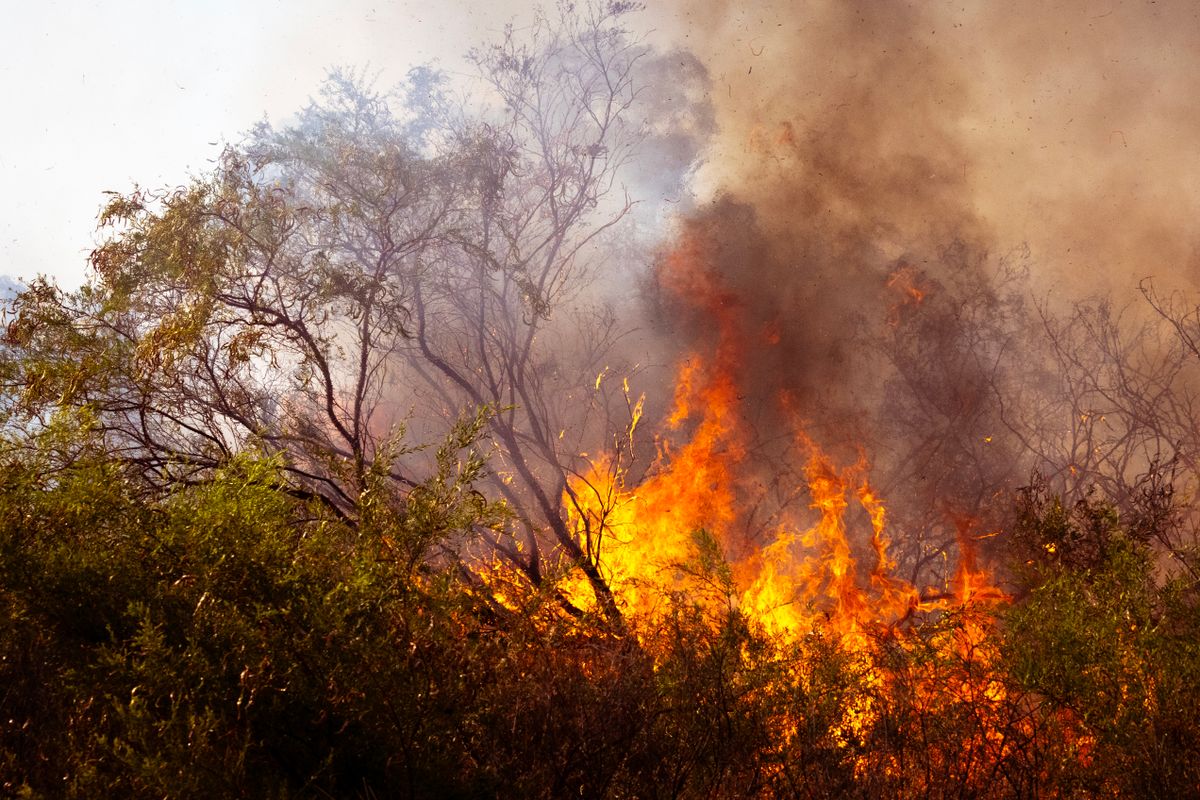
Since taking office, Burnham has said nothing about the climate crisis, this summer’s extreme heat, the wildfires spreading from south-west England to the north or the drought affecting almost three-quarters of the country. Britain is entering its fifth heatwave of the summer as climate breakdown makes extreme heat, drought and wildfire increasingly likely.
Friends of the Earth’s head of policy, Mike Childs, said: “The UK is in the grip of a growing climate crisis. Across the UK communities are under attack from relentless heatwaves, droughts and wildfires, putting lives, homes, farmers and nature at risk.
“Andy Burnham must end his silence on the climate emergency and pledge to make it a top priority by strengthening plans to protect communities from increasingly frequent and extreme weather – especially those most at risk.
“But we must also tackle the cause, not just the consequences. The government must do more to cut the pollution driving climate change by accelerating the shift to clean energy and ruling out new oil and gas developments like Rosebank and Jackdaw, and a third runway at Heathrow.”
Rosebank, Jackdaw and Heathrow expose the contradiction at the centre of government policy. Ministers claim to recognise the climate emergency while preserving new fields of accumulation for fossil-fuel, aviation and finance capital. The state tries to manage the consequences without confronting the ownership and production relations driving the crisis.
Firefighters are already confronting those consequences. They have tackled 966 wildfires this year, including 458 in July alone. Steve Wright, general secretary of the Fire Brigades Union, has called for 5,000 additional firefighters and said that providing enough properly equipped crews must become a national priority.
This demand comes from organised workers who understand the danger directly. Firefighters aren’t discussing an abstract future model. They’re being sent into worsening fires without enough colleagues or equipment.
Britain lacks much of the specialist equipment available to European firefighting services. It has no dedicated fixed-wing water-bombing planes or specialist aerial firefighting aircraft. A wealthy imperialist country possesses enormous scientific, industrial and financial resources, yet it hasn’t developed the public capacity needed to defend its population from predictable climate threats.
No 10 announced that Burnham would chair an emergency Cobra meeting as temperatures continued to rise. Forecasts suggested 33C on Wednesday and as much as 38C on Thursday.
Cobra meetings are part of the state’s habit of reacting to emergencies once they become impossible to ignore. Emergency management substitutes for preparation, just as compensation substitutes for prevention and public reconstruction substitutes for forcing private capital to bear the costs it creates.
Defra defended its record, saying: “Climate adaption underlines work throughout the whole department – from nature recovery to flooding response to sustainable farming on top of a direct and dedicated team. It is a key priority for this government.
“We are already strengthening our approach to climate adaptation through our work with the National Drought Group, building nine new reservoirs across the country and investing at least £10.5 billion by March 2036 to construct new flood and coastal erosion schemes, as extreme weather becomes more frequent.”
Work elsewhere in the department doesn’t explain away a dedicated adaptation staff of only 20. Nor do reservoirs and spending promises stretching to 2036 alter the state’s present lack of preparation. Climate adaptation requires coordinated planning across housing, water, food, health, transport, energy and emergency services. Capitalism divides these needs into separate markets, budgets and opportunities for profit.
Britain has the engineers, scientists, construction workers, firefighters and material wealth needed to protect people. What stands in the way isn’t a lack of productive capacity. It’s a social order in which production is controlled for private accumulation rather than organised around collective need.
Twenty climate adaptation officials out of 6,613 aren’t an administrative curiosity. The figure expresses the class character of the state. British capitalism will defend profitable oil fields, airports, financial assets and private property while leaving workers to face the heat, smoke, floodwater and rising bills. Private profit comes first; public danger is dealt with later.