The Soviet Union helped defeat Nazi Germany, brought mass education and healthcare to a vast country, and opened the space age. Workers whose parents had lived under a tsar built institutions that changed millions of lives, yet apologists for capitalism still expect us to believe that workers can’t run a society without landlords and shareholders exploiting them.
The Soviet project began with the October Revolution in 1917, five years before the USSR was formally established. Over the following decades, Soviet people transformed their own country and helped others around the world fight for liberation. They left achievements that no account of the twentieth century can honestly ignore.
1. Breaking the backbone of Nazi Germany
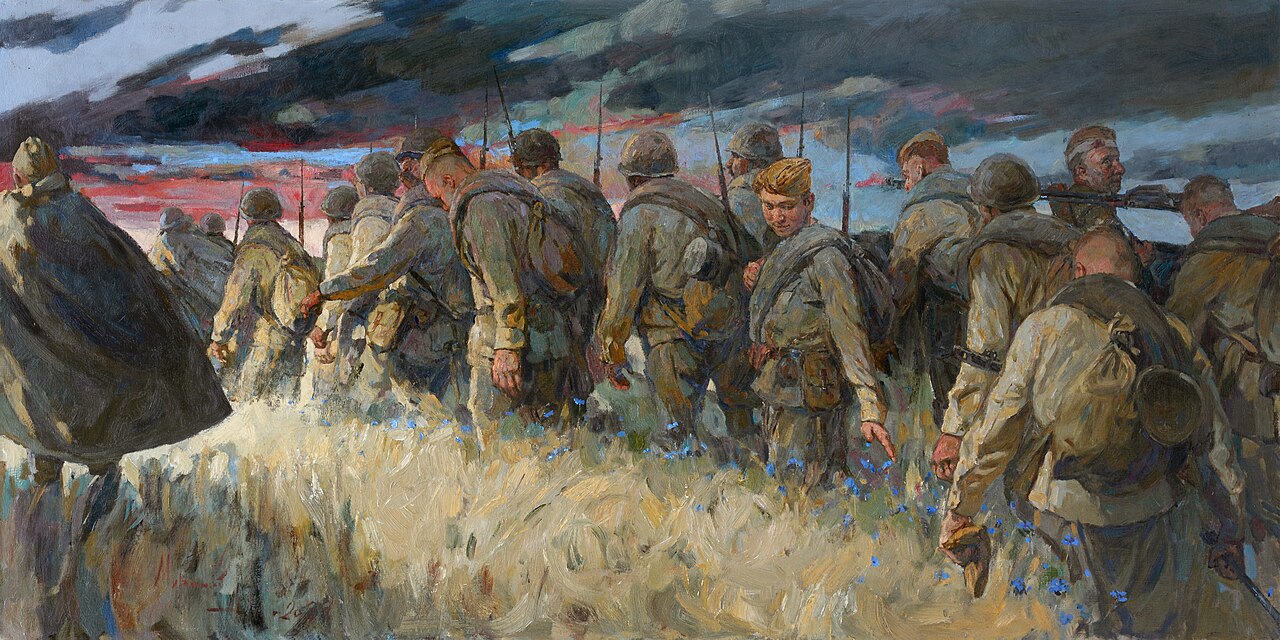
Soviet soldiers stopped Hitler’s armies at Moscow, defeated them at Stalingrad and fought their way to Berlin. An estimated three-quarters of German military and equipment losses occurred on the Eastern Front. Around 27 million Soviet citizens died during the war, roughly two-thirds of them civilians.
The Nazis invaded to conquer territory and wage a war of annihilation against the Soviet population. They targeted Jews, communists, Slavs and others for mass murder. Soviet soldiers helped destroy the regime carrying out that slaughter; on 27 January 1945, they liberated Auschwitz.
Workers making weapons, peasants supplying food, partisans fighting behind German lines and soldiers from across the Soviet republics sustained that resistance. The victory belonged to millions of people whom the invaders intended to subjugate or kill.
2. Teaching an entire society to read
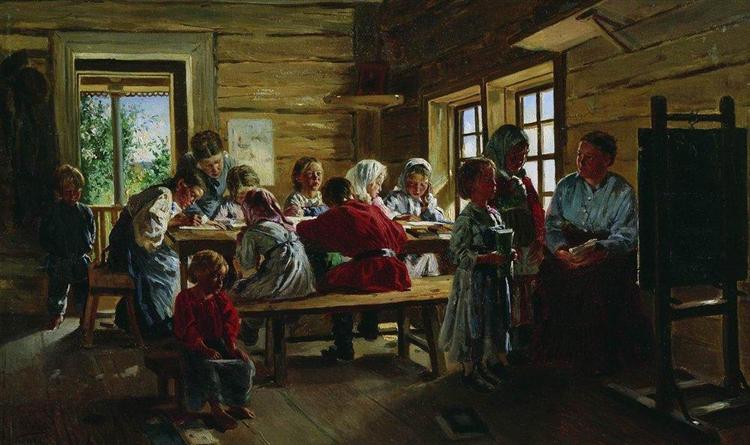
In 1926, only 56.6 percent of Soviet people aged 9–49 were literate. By 1939, that figure had reached 87.4 percent; by 1970, it was 99.7 percent. Teachers and volunteers taught adults alongside children, while the government expanded schools and trained new teaching staff.
Soviet educators also developed textbooks and taught in numerous languages. In 1972, schools provided instruction in 57 native languages, many of which had no written language at the time of the revolution. Women and people in regions neglected under tsarist rule made especially large advances.
Millions of workers and peasants could now read newspapers, study science, write to one another and take part in political arguments for themselves. Their children entered technical colleges and universities. People whom the old ruling class had treated as labouring hands became teachers, engineers and researchers.
3. Turning an agrarian country into an industrial power
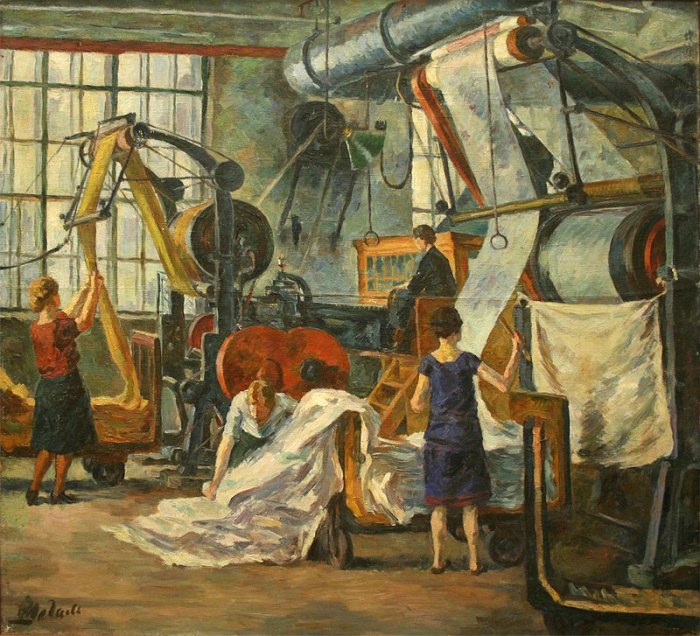
Soviet workers built factories, power stations and machinery on a scale that transformed a predominantly agricultural economy. Planners directed investment into industries that could equip further industries, while millions of people moved into new jobs and learned new skills.
Economic historian Robert C. Allen places the USSR among the twentieth century’s most successful developing economies, particularly during the rapid growth of 1928–1970. His research credits state industry and planned investment with much of that advance. He also finds that Soviet people increased their consumption alongside the expansion of industrial production.
The class question was practical: who would decide what workers built, and who would receive the proceeds? Soviet authorities could fund production without first satisfying private shareholders. Workers built the industrial capacity to defend their country, expand public services and eventually launch spacecraft. They demonstrated that capitalists weren’t indispensable organisers of modern industry.
4. Making healthcare a public responsibility
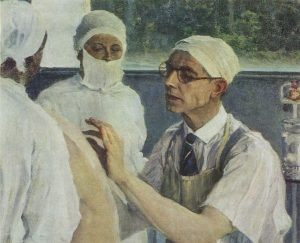
The Soviet government built a nationwide network of hospitals and clinics, trained medical workers and financed treatment publicly. Under the Semashko system, district doctors coordinated care for the people in their area. The USSR became one of the first countries to approach universal access to basic healthcare, provided free at the point of use.
Alongside improvements in living conditions, Soviet health workers helped achieve enormous gains in survival. Published figures show male life expectancy rising from 44 years in 1938–39 to 66 in 1964–65, and female life expectancy from 50 to 74.
Care varied in quality, and progress later stalled. But millions of people received treatment through a system organised to serve the population. Doctors’ work, hospital beds and medical training were public responsibilities, funded collectively. Workers didn’t have to make themselves profitable customers before society accepted responsibility for treating them.
5. Housing tens of millions of people
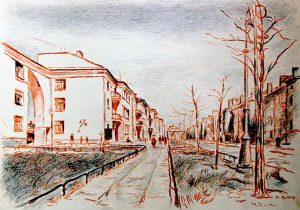
Between 1956 and 1965, more than a third of the Soviet population moved into new housing. Builders erected standardised apartment blocks at enormous speed. Many families moved from hostels or shared communal apartments into homes of their own.
These flats were often small and plain. For families who had shared living space with strangers, a separate home meant privacy and greater control over daily life. Soviet authorities also subsidised housing heavily: a joint international study recorded housing at only 2.8–3 percent of workers’ and employees’ expenditure in 1987–89.
Long waiting lists, overcrowding and poor construction remained real problems. Yet Soviet builders housed millions without requiring each family to offer a landlord an attractive return. The familiar sneer at Soviet apartment blocks passes over the people who finally had a front door of their own, and the wages they could spend on something other than rent.
6. Opening education and skilled work to women
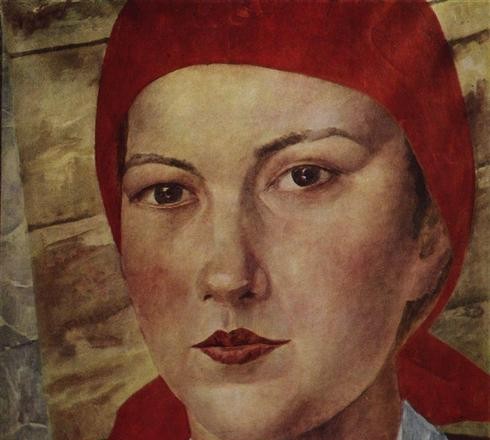
Soviet women entered universities, laboratories, factories and professions in enormous numbers. By 1976, women made up 69 percent of doctors. In the same year, nurseries and kindergartens cared for 12.1 million children. The state also provided paid maternity leave.
These measures addressed material barriers to women’s independence. Teachers trained women for skilled work; public childcare workers took on part of the care that families had expected mothers to perform at home. Millions of women earned their own wages and pursued careers that their grandmothers could scarcely have imagined.
Soviet Russia also legalised abortion in 1920. The government reversed that advance by prohibiting most abortions in 1936, before restoring legal access in 1955. Women’s emancipation was an unfinished and contested struggle throughout Soviet history. Even so, Soviet women achieved mass access to education, employment and public services that went far beyond admitting a handful of wealthy women into the existing elite.
7. Establishing secure work and paid rest as social rights
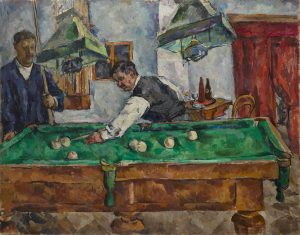
The USSR organised employment around a state guarantee of work. When international financial institutions examined the move towards capitalism in 1991, their report stated: “Open unemployment will be a completely new phenomenon in the USSR”. They expected enterprises operating under the proposed market rules to shed workers.
Employers under capitalism can use the threat of unemployment to make workers accept worse pay and conditions. Soviet workers enjoyed substantial protection against losing their livelihoods because an enterprise couldn’t make enough money.
Paid rest also belonged in the system of workers’ rights. As early as June 1918, the Soviet government legislated a fortnight’s paid annual holiday for workers and employees who had completed six months of continuous employment. Workers had a claim on time away from production, with their wages protected. A holiday became something a worker was entitled to take.
8. Opening the space age
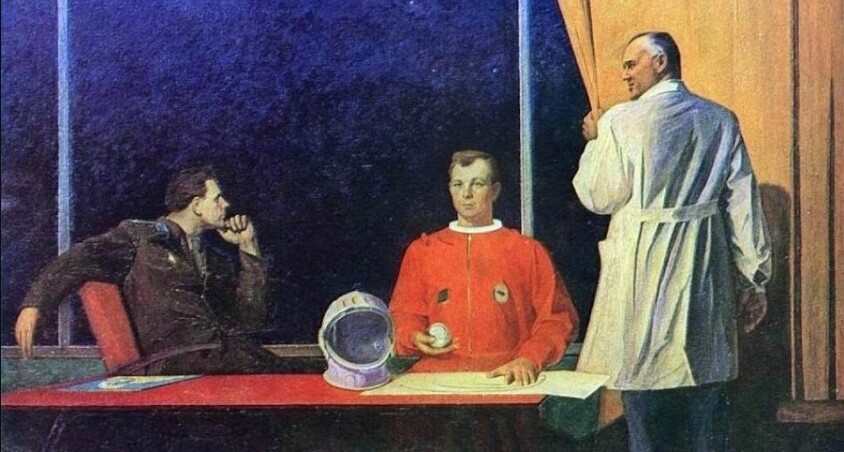
Soviet scientists and engineers launched Sputnik, the world’s first artificial satellite, in 1957. Yuri Gagarin became the first human in space in 1961. Valentina Tereshkova became the first woman in space in 1963, and Alexei Leonov performed the first spacewalk in 1965.
Tereshkova had worked in a textile factory before joining the cosmonaut programme. Her journey made the wider transformation visible: a working woman from a country recently devastated by war could reach the frontiers of human knowledge.
Behind the celebrated cosmonauts stood teachers, machinists, mathematicians, engineers and countless other workers. Soviet authorities funded research and trained specialists through public institutions. Their successes demolished the claim that only private entrepreneurs could organise ambitious scientific work. Soviet people reached orbit without waiting for a billionaire to find a business opportunity there.
9. Supporting struggles against imperialism and apartheid

The USSR supplied weapons, training, education and diplomatic support to movements fighting colonial and racist rule. In South Africa’s liberation struggle, Soviet instructors trained around 2,000 members of Umkhonto we Sizwe, the ANC’s armed wing. The Soviet Union also supplied military equipment and educated South African activists.
Nelson Mandela acknowledged that support in the ANC’s January 1992 statement, thanking the peoples and governments of the former Soviet Union and Eastern Europe for helping during the movement’s hardest years.
Vietnamese revolutionaries also received substantial Soviet political, economic and military assistance in their struggle for independence and reunification. Vietnam’s foreign minister later identified that assistance as a significant contribution to the victory of 1975.
Africans and Asians fought their own liberation struggles. Soviet people helped supply the means to sustain them. Fighters confronting imperial armies and racist states could obtain weapons, training and international backing from a major power committed to supporting their cause. That changed what they could attempt and what their enemies could impose.
10. Helping eradicate smallpox worldwide
In 1958, Soviet epidemiologist and deputy health minister Viktor Zhdanov urged the World Health Assembly to undertake a global campaign against smallpox. The Soviet Union backed the proposal with vaccine production: between 1959 and 1966 alone, it donated more than 400 million doses.
Soviet specialists joined an international effort involving health workers across the countries still affected, WHO staff and contributors from numerous other states, including the United States. They vaccinated people, investigated outbreaks and interrupted transmission. In 1980, the World Health Assembly declared smallpox eradicated.
Soviet workers and scientists helped supply vaccines to people regardless of their ability to pay. Together with their colleagues abroad, they helped free humanity from a disease that had killed, blinded and scarred generations. Publicly organised science achieved a permanent improvement in human life on a world scale.
The people who built these schools, homes, hospitals and spacecraft produced for the benefit of society, rather than the benefit of capital. Through public institutions, they provided education, healthcare, financial security, and paid time away from work. Their achievements remain a practical answer to everyone who insists that an exploiting class is the price we must pay for progress.
Imagine credit:
Cornflowers by Andrey Mironov released under the Creative Commons Attribution-Share Alike 4.0 International license