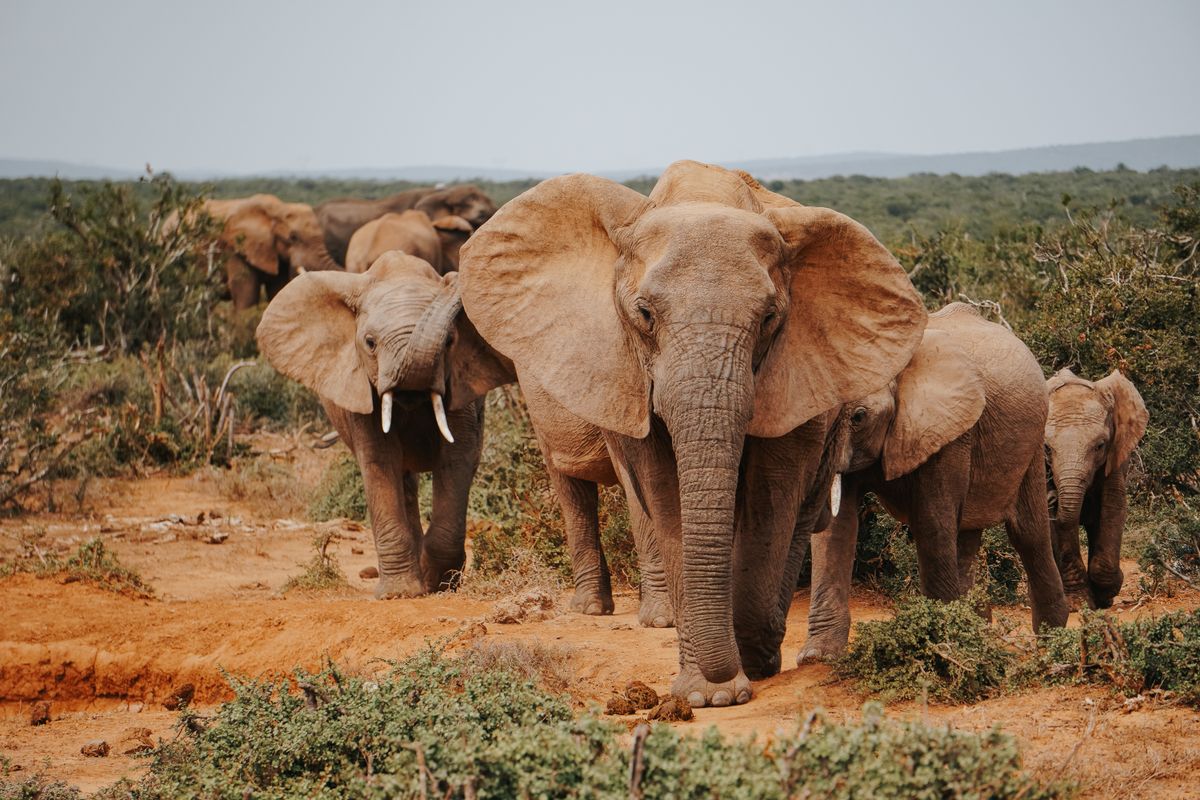
A declining elephant population in Sri Lanka appears to have crossed a social tipping point. Researchers at Udawalawe National Park found that large, densely connected communities had fractured into smaller, more isolated groups. The animals left behind were changing their relationships with one another as their numbers fell.
The findings, published in Science on 12 November, come from a University of California San Diego study of more than 440 wild female Asian elephants over 12 years. Postdoctoral researcher Anastasia Madsen led the study from the laboratory of Associate Professor Shermin de Silva.
“We see individual elephants leaving and possibly dying at accelerating rates, but new individuals are not coming into the population,” said Madsen. “With fewer individuals in the population, those who are left will naturally have fewer relationships. However, the remaining elephants are also changing their relationships with each other.”
These relationships are part of how elephants feed themselves, acquire information and raise their young. The researchers found gradual losses preceding a sudden change in the networks: beyond an apparent threshold, the surviving animals lived together differently. Counting the animals that remain won’t, by itself, reveal the condition of their communities.
The researchers attribute the decline to a likely combination of deaths, permanent emigration and fewer incoming individuals. They identify poaching and conflict with humans as pressures on elephant populations more broadly, and disrupted habitat connections and reduced food supplies as possible contributing factors in and around Udawalawe. The researchers don’t establish how much each contributed to the changes observed or investigate the economic decisions behind land use.
But describing pressure on wildlife simply as “human expansion” leaves out the class relations that govern those decisions. Rural workers, small farmers, large landowners and corporate investors don’t wield equal power over land. People trying to secure a livelihood don’t decide its use on the same terms as owners seeking the highest return on an investment.
Owners can profit from changing how land is used while leaving neighbouring communities and wildlife to bear the damage. They count the returns they can collect; the loss of an elephant community’s relationships needn’t appear as a loss in their accounts. Under imperialism, investors in the dominant capitalist economies can direct investment abroad alongside local owning classes, collecting income far from the habitats under pressure. Blaming “humanity” indiscriminately lets the people directing that investment disappear from view.
At Udawalawe, the researchers have documented social fragmentation within a national park. A protected boundary doesn’t, by itself, ensure that elephants can maintain their relationships or form new ones to replace those they lose. Nor can conservationists assume that reversing a population decline would automatically restore its previous social structure. The researchers warn that the fractured networks may be difficult to repair.
“In general, we need to be more aware of these types of tipping points where we see sudden shifts after changes have been slowly building up,” said Madsen. “Once we move past the tipping point, it’s much harder to go back to previous states.”
The warning matters wherever owners pursue immediate returns and leave others to deal with ecological damage later. They can collect their profits long before anyone understands the full consequences, while those attempting repairs have no guarantee of success. The surviving elephants still have to find food and raise their young. They now face those tasks in smaller, less connected communities, and rebuilding the relationships they have lost may prove much harder than a headcount suggests.