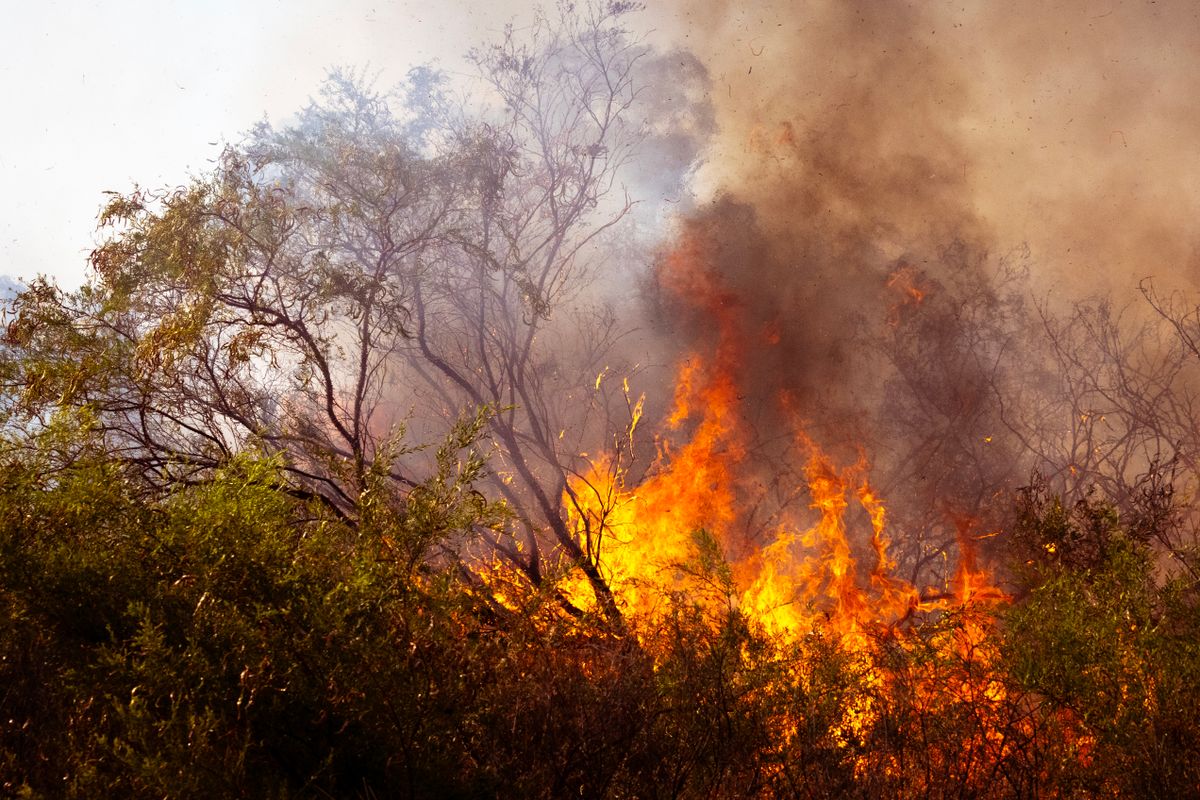
Britain has endured a summer of record-breaking wildfires, deadly heat and drought. Almost 2,900 heat-associated deaths were recorded in England during May and June alone. Homes have been destroyed by fires in the West Midlands, while deadly wildfires have swept across Europe.
Yet even as the climate crisis becomes harder to ignore, the party governing Britain remains more concerned with opinion polls than with protecting human life. Labour’s debate isn’t centred on what must be done, but on whether talking about climate change will help or hurt it at the next election.
Some Labour MPs think the government’s caution is an electoral mistake. One described it as “a failure to recognise where our vote is”.
Jeevun Sandher, Labour MP for Loughborough and a parliamentary private secretary in the energy department, argued that climate policy could strengthen the party’s electoral coalition.
“Climate is a fight that fires up our base, persuades the middle and splits our opponents,” he said.
Another Labour MP was equally blunt: “We’re not remotely prepared for the fact that our voter base is radically changing. We’re trying to ride two horses. Half of our movement is based on net zero and left-leaning values and we’re still running scared of Reform.”
This is how bourgeois politics responds to a mounting social disaster. Thousands die, homes burn and water supplies shrink, but the crisis is processed first as an electoral opportunity or danger. Human needs appear only after they’ve been translated into polling figures.
Reform UK, meanwhile, has taken up the role of open climate reaction. Its deputy leader Richard Tice urged people to enjoy the heat and dismissed efforts to confront climate breakdown.
“When it’s a bit warm, let’s enjoy it,” Tice said. “And if it means that English wine and sparkling wine gets better and better, fantastic. That means we can take on the French – fantastic. Let’s celebrate some of these things rather than just be sort of doom and gloom about it.”
There’s nothing harmless about this foolishness. Extreme heat is not experienced equally. The rich can retreat into air-conditioned homes, travel elsewhere and pay for whatever protection they need. Workers endure overheated rented housing, dangerous workplaces, failing infrastructure and public services weakened by years of cuts. Tice can celebrate English wine because other people bear the physical cost of the heat.
The Conservatives offer much the same class politics in a slightly more respectable form. Shadow energy and net zero secretary Claire Coutinho has called for cheap electricity to take priority over climate targets. Her answer is more nuclear and gas, followed by letting “consumer choice be king”.
But consumers aren’t kings under capitalism. What people can buy is determined by their wages, rent, energy bills and access to transport and infrastructure. A tenant can’t simply choose to insulate a landlord’s property. A worker can’t choose an electric car they can’t afford or public transport that doesn’t exist. Treating climate policy as a collection of individual purchases hides the decisive question: who owns production, who controls investment and which class is made to pay?
The public is much less divided over climate change than the political spectacle suggests. More in Common found that 67 percent of people are worried about unbearably hot weather becoming more frequent, while 86 percent believe climate change was at least partly responsible for recent heatwaves. That includes 73 percent of Reform supporters, 87 percent of Conservative supporters and 96 percent of Labour supporters.
Support for Britain’s net zero target, however, has fallen from 68 percent in 2024 to 45 percent today. Opposition has nearly doubled, from 12 percent to 23 percent.
There’s no great mystery here. Concern about climate breakdown is being separated from support for “net zero” because the capitalist transition is increasingly presented as another demand for personal sacrifice. Workers are told to accept higher bills, replace cars and boilers, and somehow make greener choices with falling real incomes. The owners of the energy companies, banks, landlords and major industries retain their wealth and control.
The ruling class then points to the resulting anger as evidence that climate action itself is unpopular. It creates a policy built around costs for workers and subsidies and investment opportunities for capital, then uses resistance to those costs to justify retreat.
Labour insists it hasn’t abandoned its climate agenda. Government figures point to the clean power 2030 target, investment in clean energy and nuclear power, the transition to electric vehicles and heat pumps, the refusal to issue new oil and gas licences, and Burnham’s wildfire video.
“This government has the most ambitious energy climate agenda in British history,” a Labour source said. “Labour MPs know that this is the right agenda for the country and is essential for uniting our electoral coalition.”
But ambition measured against previous British governments is a low bar.
The Greens and Liberal Democrats have tried to push climate breakdown higher up the political agenda. Green leader Zack Polanski called for an emergency Cobra meeting and held a “reality check” conference on extreme heat. The Liberal Democrats have argued that Britain must become “climate ready” by protecting homes and buildings from extreme temperatures.
Adaptation is already a matter of life and death. But the deeper contradiction remains. Capitalism depends on endless accumulation, expanding production and profit-making, while climate stability requires conscious control over what is produced, how it is produced and where society’s resources are directed. The market can ration safety according to wealth, but it can’t plan rationally for collective survival.
Britain’s political class can see the fires. It can count the deaths. What it can’t contemplate is surrendering capital’s power to decide humanity’s future.