Andy Burnham has pledged “100 percent” support for Ukraine as British-made drones strike deeper into Russia, hitting energy facilities and civilian targets while doing little to alter the course of the war.
Asked in Wolverhampton about Moscow’s warning that Britain’s growing involvement would have consequences, Burnham said:
“This is the UK doing what it has long said it would do, which is to support Ukraine 100 percent against this illegal war led by Vladimir Putin.
“We are providing support so that Ukraine can defend itself, and that’s been the British position all the way through this conflict by previous prime ministers. It remains the case with me. We are not fair-weather friends. We will be there in Ukraine’s hour of need, and that won’t change.”
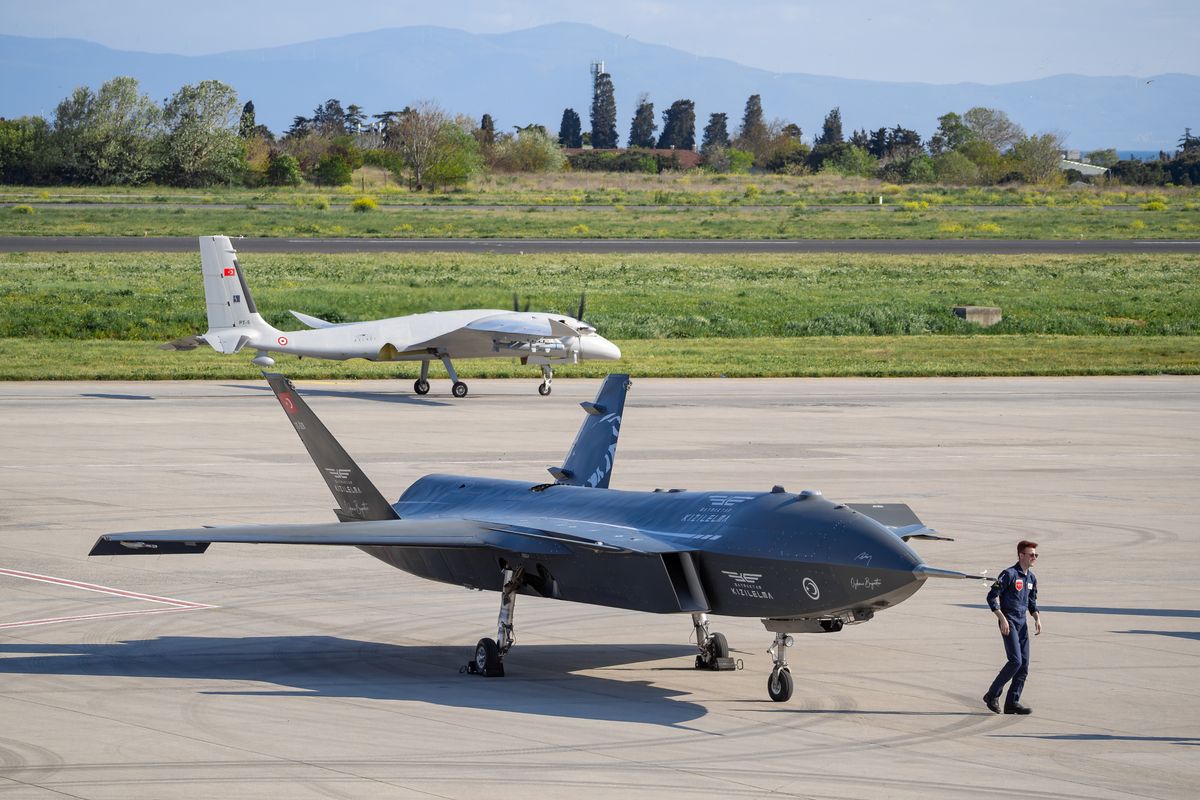
The phrase “support Ukraine” hides more than it explains. Britain isn’t merely sending bandages or helping civilians displaced by war. British companies are producing weapons for Ukraine’s “deep strike” campaign inside Russia. British-made Storm Shadow missiles have already been used against Russian territory. Now drones manufactured in Britain are being employed in an expanding campaign of long-range attacks.
These strikes increasingly target energy infrastructure and civilian economic life. Ukraine has attacked large depots belonging to Wildberries, Russia’s biggest online retailer, burning merchandise worth billions of pounds. Retail depots aren’t military bases. Warehouse workers, delivery drivers and ordinary customers aren’t soldiers.
Kyiv’s purpose is partly to make Russian civilians “feel” the war. That is terroristic violence in the plain meaning of the term: violence against a civilian population and civilian infrastructure intended to spread fear and produce political pressure. Burning civilian merchandise and attacking infrastructure used by the public doesn’t become defensive merely because the explosives carry a Ukrainian flag or were manufactured by a British company.
Seven people were reportedly killed by Ukrainian long-range attacks overnight on Monday. Five civilians were also reported killed in Ukraine by Russian strikes. Working people are paying with their lives on both sides, while the politicians directing the escalation remain far from the drones, missiles and burning buildings.
Ukraine carried out three times as many long-range strikes in July as it did in January. Russia says it shot down 598 Ukrainian drones over 19 Russian regions, Crimea and the Black and Azov seas in a single operation. Yet these spectacular raids haven’t stopped Russian forces from continuing to gain ground along the front. Even Western military experts doubt that Kyiv can sustain the current rate of attacks.
The strikes serve a propaganda function. They provide dramatic footage for Western news channels, reassure Ukraine’s shrinking domestic audience and help NATO governments justify another round of military spending. Their limited battlefield value only makes the attacks on civilian life more revealing.
Russia’s embassy accused Britain of trying to contain Russia and inflict maximum damage through a proxy war. It warned:
“London’s actions will inevitably carry consequences for which it will have to answer,” it said. “The deeper its involvement in the conflict and the greater its support for Kyiv’s terrorist machinery, the higher the price it will pay.”
Burnham and the Ministry of Defence repeat the familiar claim that Britain is simply helping Ukraine resist an unprovoked invasion. This account requires the public to forget everything that happened before February 24, 2022.
The war didn’t drop out of the sky that morning. Russia’s intervention was an escalation of a conflict rooted in the destruction of the Soviet Union, NATO’s eastward expansion and the civil war that began in Ukraine in 2014.
The breakup of the Soviet Union left behind stranded Russian-speaking populations, disputed territories and nationalist antagonisms. These fractures were especially severe in Ukraine, where the Russian-speaking population was concentrated in the east and south. The country’s political division could be seen clearly in election results long before the present war.
US imperialism exploited those divisions. NATO absorbed Poland, Hungary and the Czech Republic in 1999, followed by the Baltic states and other Eastern European countries in 2004. At its 2008 Bucharest summit, NATO declared that Ukraine and Georgia would eventually become members. Russian governments had objected to NATO expansion since the 1990s, when Boris Yeltsin was president. George Kennan and other senior US officials had also warned that the policy would produce confrontation with Russia.
Washington continued because confrontation wasn’t an unforeseen accident. Containing Russia, separating it from Europe and maintaining US supremacy over Eurasia were central aims of American strategy after the Cold War.
The United States poured billions of dollars into Ukrainian political organisations under the label of “democracy promotion”. In 2014, the elected government of Viktor Yanukovych, who favoured military non-alignment, was overthrown in the Maidan coup. US official Victoria Nuland and ambassador Geoffrey Pyatt were recorded discussing who should enter the new government before Yanukovych had been removed.
Far-right nationalist formations played a leading role in the violence. The new authorities turned sharply against Russia and against the political and cultural rights of Russian-speaking Ukrainians. Crimea broke away and was annexed by Russia after a referendum. Donetsk and Luhansk rejected the coup government, and Kyiv launched military operations against the Donbass.
That was the beginning of the Ukrainian civil war. Thousands were killed before Russian troops crossed the border in 2022.
The Minsk agreements offered Donetsk and Luhansk autonomy while keeping them formally inside Ukraine. They were endorsed by the United Nations Security Council. Yet the agreements were never implemented. Former German chancellor Angela Merkel later acknowledged that Minsk had given Ukraine time to strengthen its armed forces. France and Germany posed as mediators while NATO trained and armed Kyiv.
Russia proposed a new European security agreement in late 2021 centred on Ukrainian neutrality and limits on NATO’s military expansion. Washington dismissed it. Negotiations between Russia and Ukraine during the opening weeks of the 2022 intervention again discussed neutrality. Britain’s Boris Johnson travelled to Kyiv as the talks were being abandoned and encouraged the Ukrainian government to continue fighting.
None of this makes it into Burnham’s story. It can’t. Once this history is admitted, Britain’s role looks less like solidarity and more like what it is: participation in a US-led proxy war.
Lenin’s analysis of imperialism remains essential here. Imperialism isn’t simply a bad policy chosen by foolish politicians. It grows out of monopoly capitalism, in which banks, energy firms, arms manufacturers and other giant corporations become tied to state power. Competition for markets, resources and strategic territory increasingly takes military form.
NATO is an armed institution of that system. Its expansion provides markets for Western weapons, places military infrastructure closer to rival powers and keeps European states under US strategic leadership. Ukraine has been turned into a battlefield for this project.
Britain acts as a junior imperialist partner. Its arms companies receive orders, its politicians demonstrate loyalty to Washington and its military establishment gains another justification for permanent rearmament. Public money becomes private profit every time a drone, missile or launcher is ordered and destroyed.
British workers pay at the other end. They pay through taxes, cuts to public services and higher energy costs. Driving up household energy bills by sanctioning Russian gas was a voluntary choice made by the British government. It wasn’t an unavoidable natural disaster, and it wasn’t a bill handed directly to British households by Moscow. British ministers chose sanctions and helped sever Europe from cheaper Russian energy supplies. They accepted higher prices for working people while energy corporations and alternative suppliers collected the gains.
The same government that says there’s never enough money for wages, housing or public services always finds funds for weapons. The priorities aren’t confused. They reflect the class interests the state serves.
Russia is a capitalist country, and its ruling class pursues its own state interests. Marxists don’t need to paint the Kremlin red to recognise NATO expansion or British imperialism. Russia’s social system doesn’t turn a Wildberries warehouse into a military target, make Russian civilians responsible for their government or transform terroristic drone attacks into “defence”.
Burnham’s promise of “100 percent” support means support without a stated limit: more weapons, more deep strikes, more attacks on civilian life and greater danger of direct war between nuclear powers. The Ukrainian and Russian working classes supply the dead. British workers supply the money. Arms, energy and finance capital take the profits.
That’s the class content hidden inside Britain’s talk of friendship and resolve.