
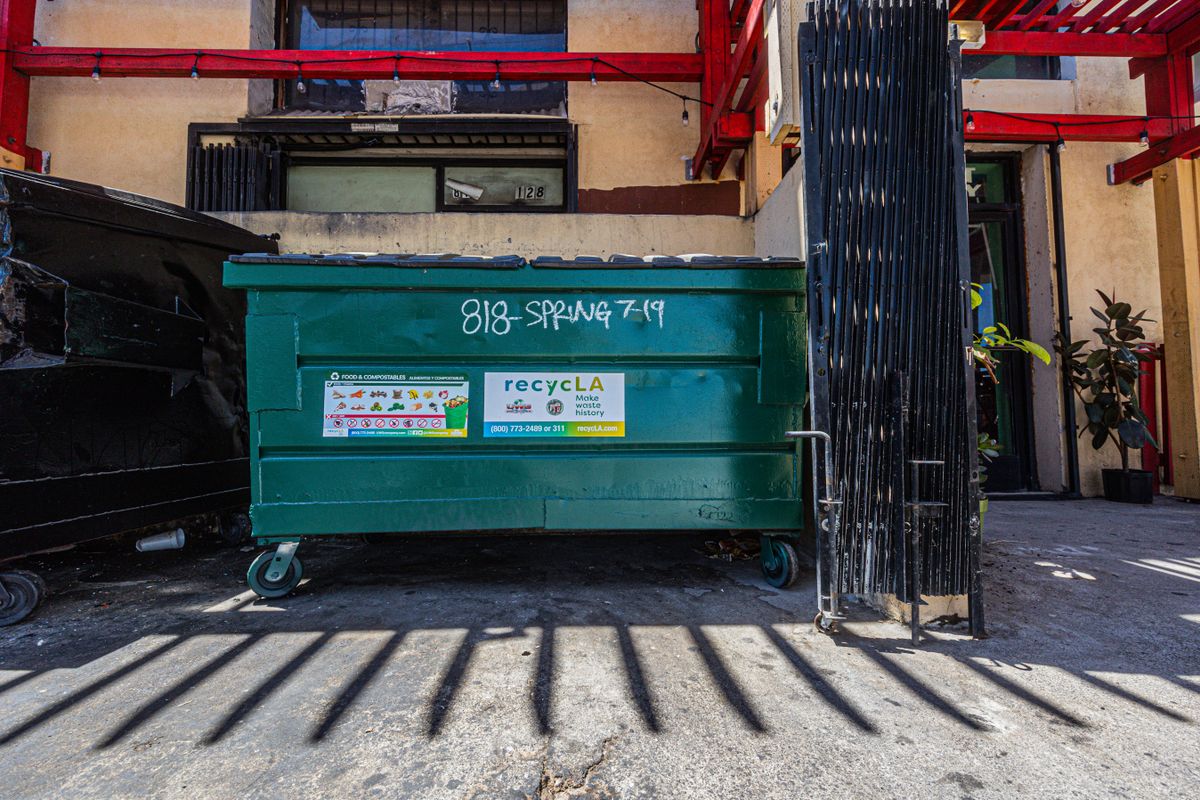
Darryl Baker found entire new wardrobes for her children among clothes dumped beside her local supermarket’s recycling bins. There was enough for her nephews and nieces too, with more put away for years to come. Before taking any, she asked the supermarket staff for permission. They agreed.
“My mind was blown,” says the north London mother, who reckons she saved hundreds of pounds over six months. “This stuff is just strewn all over the floor.”
Her finds included Ralph Lauren, Nike and The North Face. She also kept clothes for herself, donated others and sold some, recently getting £30 for a men’s Barbour jacket. People had discarded things that could still meet another family’s needs for years.
Capitalism’s defenders praise the market for matching supply to demand. But retailers count demand in pounds, not in children who need clothing. They sell to whoever can pay, including people whose wardrobes are already full. Someone who needs a coat but can’t afford one offers them no profitable business. Meanwhile, usable clothes end up beside the bins.
Baker is among the people described as “dumpster divers”, who recover goods from commercial bins and other people’s rubbish. Their motives vary: saving money, finding things to give away, making something from the proceeds, and disgust at the waste. What they retrieve includes ordinary necessities.
Households discarding possessions they’ve already bought are one source of waste. Businesses disposing of unsold stock face a different calculation. They can have a financial reason to throw useful goods away.
Once a company has bought or manufactured stock, it has already spent that money. Selling cheaply could still recover some of it. But the company may have to pay more to store, sort, transport and sell the remaining goods than a sale would bring in. If disposal leaves the firm with a smaller loss, the owners can choose the bin. Someone else’s need for the goods won’t pay those costs.
Giving the stock away can also require the firm to pay workers to sort and move it. And cheap or free goods can compete with its other sales. Where customers would otherwise buy at full price, a company can sacrifice some stock to protect the prices and profits of the rest. The owners may prefer to keep useful goods out of circulation because people who get them cheaply or free might not buy replacements from them.
Capitalists can overproduce for the market while people still go without. Their surplus goods exceed what they can profitably sell, not what people could use. Workers have already done the labour and used the materials. The owners can then count throwing the result away as a saving.
In Essex, sales assistant Charlotte Bayford finds toiletries and other goods when university students leave for the summer and discard what they don’t want to take home.
“I haven’t bought shampoo for eight years,” she says.
She also recovers sealed food, including tins of baked beans, gives items to charity and sells some of her finds. A bottle doesn’t stop containing usable shampoo because someone has put it in a bin. Workers have already done the labour needed to produce it. Throwing it away squanders that labour, along with the materials and energy they used.
In Fort Worth, Texas, Jeff Ferrell has spent more than 50 years recovering discarded goods. Now 72, he still goes out every day by bicycle, concentrating on affluent neighbourhoods and giving much of what he finds away.
“Almost everything in our home is scrounged, and I never buy, for example, soap or toiletries or medical supplies, or shoes and clothes and tools and garden supplies,” he says.
Ferrell estimates that savings and sales together make his finds worth tens of thousands of dollars a year. Scrap metal alone brings in about $150 (£110) every fortnight, while his wife sells more valuable objects on eBay. In London, stylist Millie Diamond retrieves discarded fabrics and clothes to refashion, selling some of what she makes. She estimates that one dress she found was worth £600.
The price tags and brand names make these finds sound extraordinary. But workers made every garment, packed the toiletries and transported the goods. Companies sold the products of that labour for profit. The branded clothes in the rubbish are also the remains of working days: hours of labour that people are casually discarding while others try to make their wages cover the next purchase.
In the imperialist world economy, companies organise production across borders and take profits from workers far removed from the final sale. Consumers in wealthy countries can discard the finished goods without ever seeing the people who made them. The brands advertise their names and prestige. The workers who supply the labour disappear behind the label.
Recovering these goods helps people stretch their incomes and supply others with things they need. It also takes time and effort. Households have to search through rubbish, carry things home and find someone who can use them. They perform this work after businesses and households have discarded things that still have years of use left in them.
The authorities can even prosecute people for recovering them.
Ferrell, a professor emeritus of sociology at Texas Christian University, says cities including New York, Cleveland and Wichita have made dumpster diving illegal. He explains that discarded goods can belong to a municipal authority or the private company collecting the waste. People taking them can also face trespass charges.
In Britain, solicitor Sunjay Versani says prosecution is unlikely in many cases involving genuinely discarded goods. He warns:
“But there is no general rule that something is free to take simply because it has been put in a skip or bin. If in doubt, the safest approach is to ask the owner or business for permission.”
A family can need the clothes, a diver can retrieve them and a waste company can still insist they belong to it. The state can enforce that claim even when the company intends to dispose of them. Workers have made the goods, companies have taken their money and their owners have thrown them away. Yet someone who can use them may still be told to keep their hands off.