
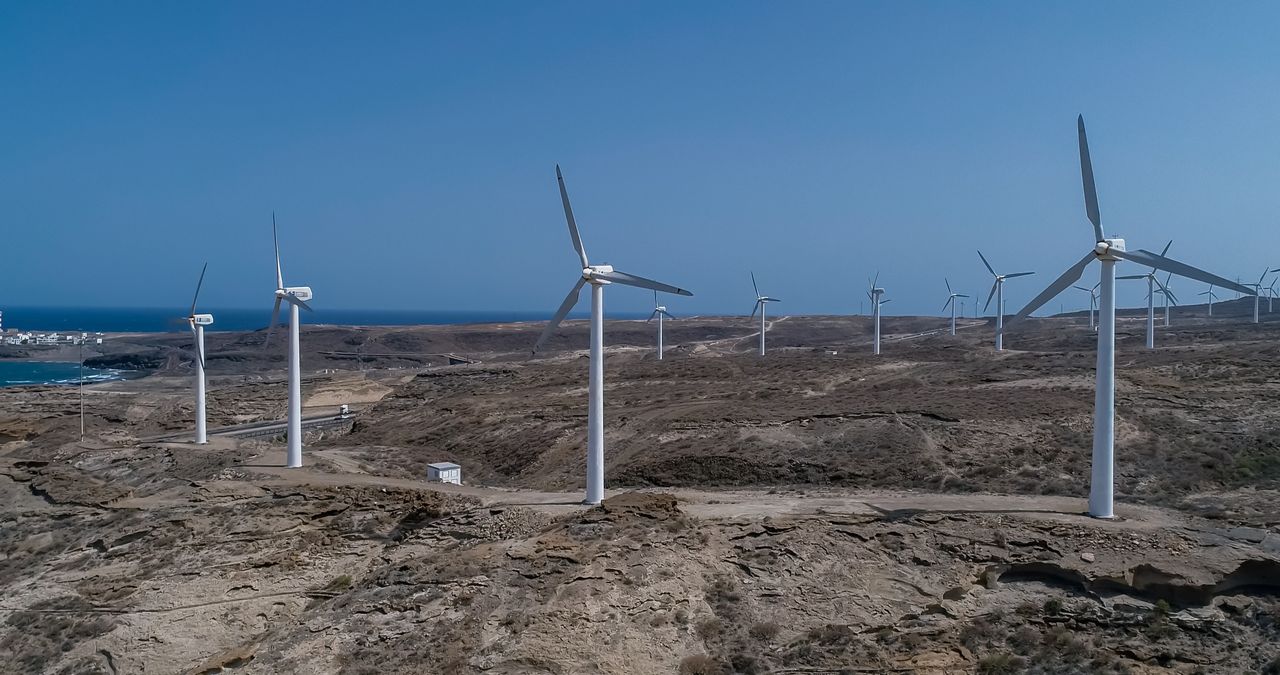
The Trump administration has agreed to pay German energy giant RWE $1.2bn (£892m) to abandon its US offshore wind projects, freeing the company to redirect the money into fossil fuel expansion.
RWE will surrender leases off the coasts of California and Louisiana and in the New York Bight. It plans to invest $900m (£669m) of the payout in a liquefied natural gas export terminal in Louisiana. The company says it will invest around €17bn (£14.5bn; $19.6bn) in the US over the next six years “to grow its generation capacity”.
“After careful consideration, it was determined there is no path forward to permit these projects in the US for the foreseeable future,” RWE said.
No one should mistake this for neutral energy policy. The capitalist state is openly deciding which branch of monopoly capital should profit, then using public money to enforce that decision. The Trump administration sneers at subsidies when they support offshore wind, while handing RWE $1.2bn to move into gas. That’s ruling-class “common sense”: socialise the costs, protect private profits and leave workers to carry the consequences.
Interior Secretary Doug Burgum claimed Americans deserve an energy system based on common sense rather than “costly subsidies”. “We welcome RWE’s agreement and voluntary investment in projects that strengthen our nation’s energy security,” he added.
There’s nothing meaningfully “voluntary” about an investment redirected through a billion-dollar state payout and an administration determined to block the alternative. Nor is the issue really energy security for the people. Security for the working class would mean affordable and reliable power, stable union jobs and an organised transition away from the fuels driving climate breakdown. What’s being secured here is a profitable market for fossil fuel capital.
The deal also shows why workers can’t put their faith in supposedly green corporations. RWE isn’t abandoning offshore wind out of principle, just as it isn’t embracing gas out of devotion to the public. Capital moves wherever profit looks safest. Wind leases, gas terminals and power stations are assets before they’re sources of energy. Once the US state made one path difficult and paid handsomely for the other, RWE followed the money.
The different wings of the capitalist class do compete. Wind developers can lose while oil and gas interests win. But their common ground is private ownership and the pursuit of profit. We don’t need to cheer for private wind capital. Instead we need to realize that no privately owned energy giant will carry out the transition society needs when higher and safer returns are available elsewhere.
Trump has made his preference blunt. He campaigned under the slogan “drill, baby, drill”. Days after returning to office, he said “we’re not going to do the wind thing” and attacked “big, ugly windmills” as dangerous to wildlife. The concern for nature rings hollow from an administration using state power to expand gas and oil production.
This isn’t an isolated deal. In March 2026, the Department of the Interior reached an agreement with TotalEnergies ending the French company’s US offshore wind projects. TotalEnergies instead agreed to redirect investment into an LNG plant in Texas and “upstream conventional oil” in the Gulf of Mexico. Last month, the administration struck a similar $129m (£96m) deal with Charlotte-based Duke Energy in exchange for terminating its offshore wind lease in the Carolina Long Bay area.
A pattern is now impossible to miss. The administration is buying wind developers out and steering capital toward LNG and oil. It’s industrial policy for the fossil fuel monopolies, whatever free-market language officials use to dress it up.
The Louisiana export terminal also puts the decision squarely in the machinery of imperialism. This gas isn’t intended only to meet domestic needs; it will be sold on the world market. The US state is helping build the infrastructure through which energy monopolies can compete for markets abroad and strengthen US economic leverage, while European capital is welcomed so long as it serves that strategy.
Lenin described imperialism as the rule of monopoly capital bound up with state power. Here that relationship is on full display. Government officials and giant corporations negotiate over billions, determine which infrastructure will be built and reorganise investment across borders. The people who produce the wealth and live with the results get no vote in the decision.
The answer isn’t a return to corporate-led “green” policy, where private developers collect subsidies and retain control. Nor is it Trump’s openly fossil-fuel programme. The major energy monopolies should be taken into public ownership under workers’ control, with investment planned around human need rather than private return. Such a programme could cut emissions rapidly while guaranteeing union jobs, full wages and retraining for workers moving out of fossil fuel industries.
RWE’s deal gives the game away. Capital will build turbines or gas terminals according to whichever promises the best return, and the capitalist state will tilt the field. Trump is tilting it toward fossil fuels with public money and political force. The working class needs more than a different subsidy scheme. It needs power over the energy system itself.