Ed Sheeran says he doesn’t use his professional platform for politics. He made that claim after Macklemore was removed from the US leg of his Loop tour for expressing support for Palestine.
But Sheeran has repeatedly used his concerts, recordings, social-media accounts and royalty income to support Ukraine in its war with Russia. His supposed neutrality only appeared when wealthy pro-Israel venue owners threatened the commercial future of his tour.
Macklemore removed for saying “Free Palestine”
Macklemore opened for Sheeran at New Jersey’s MetLife Stadium on 4 and 5 September. During his first performance, he said one reason he’d joined the tour was to stand before stadium audiences and say “Free Palestine”. He told Palestinians in Gaza and the occupied West Bank that “we have not forgotten about them” before performing Hind’s Hall alongside footage of the destruction caused by Israel’s assault on Gaza.
At the following show, Macklemore addressed Jewish members of the audience directly: “Criticism of Israel, criticism of apartheid, being against genocide in no way is a criticism of you.”
The Israeli American Council responded by launching a petition demanding his removal. Opposition also came from Robert Kraft, the billionaire owner of the New England Patriots and the Kraft Group, which owns Gillette Stadium. Kraft is a prominent supporter of and donor to Israel.
Macklemore said Sheeran told him that Kraft had barred him from appearing at Gillette Stadium and rallied other stadium owners behind the same position. The ultimatum was straightforward: remove Macklemore or lose access to the venues.
Messina Touring Group, the AEG-owned promoter handling the US tour, subsequently confirmed that multiple venues wouldn’t allow concerts to proceed with Macklemore on the bill. Stadiums in Philadelphia, Atlanta, Indianapolis, Charlotte, Arlington and Tampa joined Gillette Stadium in opposing his appearance. Macklemore, who had been scheduled for eight of Sheeran’s ten remaining US shows, was removed.
For around a week, the matter was handled largely behind closed doors. Macklemore said he and Sheeran had several difficult conversations. Sheeran objected that the words “Free Palestine” and the image of a Palestinian flag had upset people with whom he’d spoken. Macklemore refused to retreat.
“At a certain level of exposure, ‘Free Palestine’ becomes too much of a risk,” Macklemore wrote. His argument was that Palestine solidarity became unacceptable once it reached tens of thousands of people on one of the world’s largest tours. A stadium stage could become a site of resistance, encouraging other performers to speak out.
Sheeran eventually responded after Macklemore’s removal became public. “Macklemore coming off tour was the promoter’s decision, it was not mine,” “he said”. He said Macklemore’s contract was with the promoter and that he’d spent the week trying to arrange a compromise between venue owners, promoters and activists.
That’s a contractual defence, not a political one. Sheeran didn’t issue the original ultimatum, but he accepted its terms. He could have refused to continue without Macklemore and forced the stadium owners to carry out their threat. Instead, he chose to preserve the tour and remove the artist whose words had become commercially inconvenient.
Sheeran justified that choice by referring to the fans who had bought tickets and the workers and musicians whose livelihoods depended upon the tour. Those concerns are real, but they don’t make the decision neutral. The stadium owners used their control of essential venues to dictate which political views could be expressed, and Sheeran quietly carried on under the conditions they imposed.
Ukraine never counted as politics
Sheeran’s wider defence rested on an even less credible claim: “There is a reason I do not use my professional platform for politics.”
He said his audience included children and that people attended his concerts for unity, joy and escapism rather than political discussion. Yet Sheeran had no such objection to using the same professional platform in support of Ukraine.
In March 2022, Ukrainian band Antytila contacted Sheeran from the front line. Its members had joined Ukraine’s Territorial Defence Forces and appeared in combat equipment. Sheeran responded publicly: “I love you, I stand with you and I’m so proud to be playing this fundraising event next week.”
Four days later, he performed at the televised Concert for Ukraine in Birmingham. Profits from ticket sales and ITV advertising, alongside public donations, went exclusively to the Disasters Emergency Committee’s Ukraine appeal. The concert raised more than £13.4 million.
The money financed civilian assistance rather than weapons, but that doesn’t place the event outside politics. Directing aid exclusively to one country during a war is support for that country. Sheeran openly told Ukrainians that he stood with them and used a nationally televised concert to turn that position into material assistance.
In April 2022, Sheeran released the video for 2step, which had been filmed in Kyiv before Russia intervened in the Ukrainian civil war. He declared, “I stand with Ukraine,” and assigned his record royalties from the video’s YouTube streams to the Ukraine appeal.
The following month, he released another version of 2step with Antytila while members of the band were serving in the Ukrainian forces. Royalties from the video and Warner Music’s proceeds were directed to Music Saves UA, while the accompanying footage presented Ukraine’s experience of the war.
In August, Sheeran brought Antytila onto his Warsaw stadium stage to perform the song before around 80,000 people. They displayed a Ukrainian flag while the band thanked Sheeran and his team for their support.
This wasn’t confined to the opening months of the war. In February 2026, Sheeran appeared with U2 and Antytila frontman Taras Topolia on Yours Eternally. The song, released as part of U2’s explicitly political Days of Ash EP, was written as a letter from a Ukrainian soldier serving in the war with Russia. Its accompanying film followed Ukrainian soldiers fighting near the front line. Sheeran had also helped arrange the original meeting between Topolia, Bono and the Edge that led to their 2022 performance in a Kyiv metro station being used as a bomb shelter.
Sheeran therefore used televised fundraisers, social media, commercial releases, royalty income, stadium concerts and collaborations with serving Ukrainian soldiers to support Ukraine. He continued doing so as recently as this year.
There’s no credible definition of apolitical which includes all of that but excludes saying “Free Palestine”. The difference is that support for Ukraine was backed by Western governments, media organisations and corporate institutions. It carried little commercial risk. Support for Palestine challenged an imperialist ally and provoked opposition from billionaires who controlled the venues Sheeran needed.
The backlash empties Sheeran’s tour
Sheeran’s explanation didn’t contain the backlash. Instead, every artist scheduled to support his remaining tour dates withdrew, along with his live backing band.
Finneas, who had been due to open six South American shows, announced his departure with a direct explanation: “Artists must not be silenced when they speak up for the oppressed.”
Irish singer Aaron Rowe also withdrew, despite describing Sheeran as a friend who had changed his life. Referring to Ireland’s experience of colonialism, famine and occupation, he said: “I would lose all respect for myself to carry on as normal.”
Lukas Graham, which had been due to replace Macklemore on some US dates, pulled out as well. The Danish band condemned the ability of wealthy venue owners to decide which suffering artists could acknowledge: “Money doesn’t give you the right to own the conversation.”
Beoga, the Irish folk group performing as Sheeran’s live backing band, withdrew in protest at what it called “the silencing of Macklemore by Zionist lobbies.” The band said it wouldn’t perform at venues that silenced people advocating for a free Palestine.
The criticism spread beyond the tour. Singer Kehlani supported Macklemore and said venue owners had coordinated against other pro-Palestine performers in similar ways. The Palestinian Campaign for the Academic and Cultural Boycott of Israel called upon Sheeran to cancel the tour. Children’s presenter Ms Rachel accused him of giving in to the stadium owners and wrote: “Silence during a genocide is not neutral.”
That last sentence gets to the centre of the issue. Sheeran’s actions weren’t neutral. Powerful venue owners tried to silence support for Palestine, and he accepted their demand so that his tour could continue. His fellow performers were offered the same choice and decided to walk away.
Ed Sheeran has never been apolitical. He’s been willing to support one side in a war when doing so was accepted and encouraged by the political establishment. When supporting Palestine threatened his commercial relationships, apoliticism became a convenient name for siding with the people who held the money and controlled the stages.
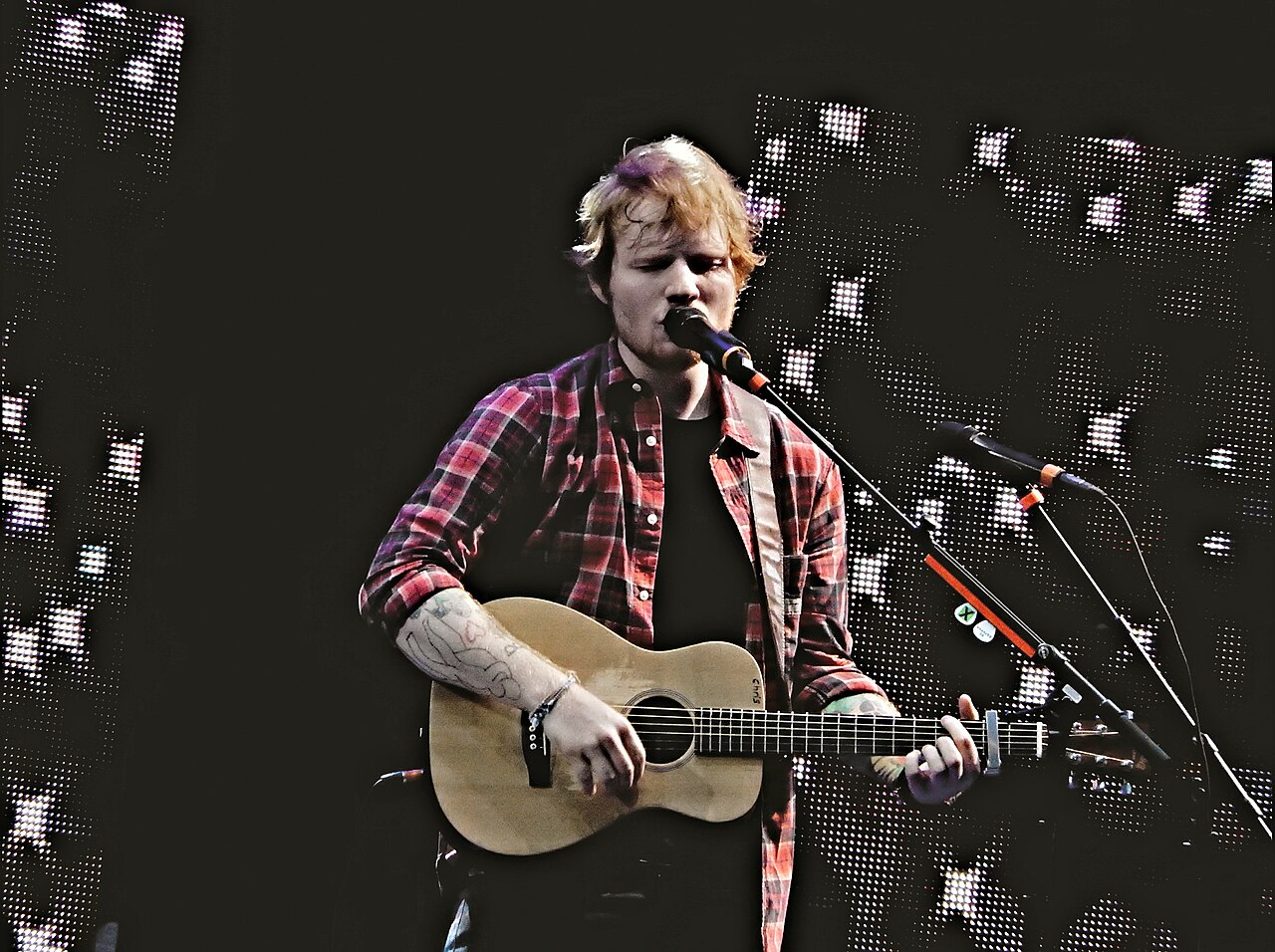
Image from Drew de F Fawkes under the Creative Commons Attribution 2.0 Generic licence