
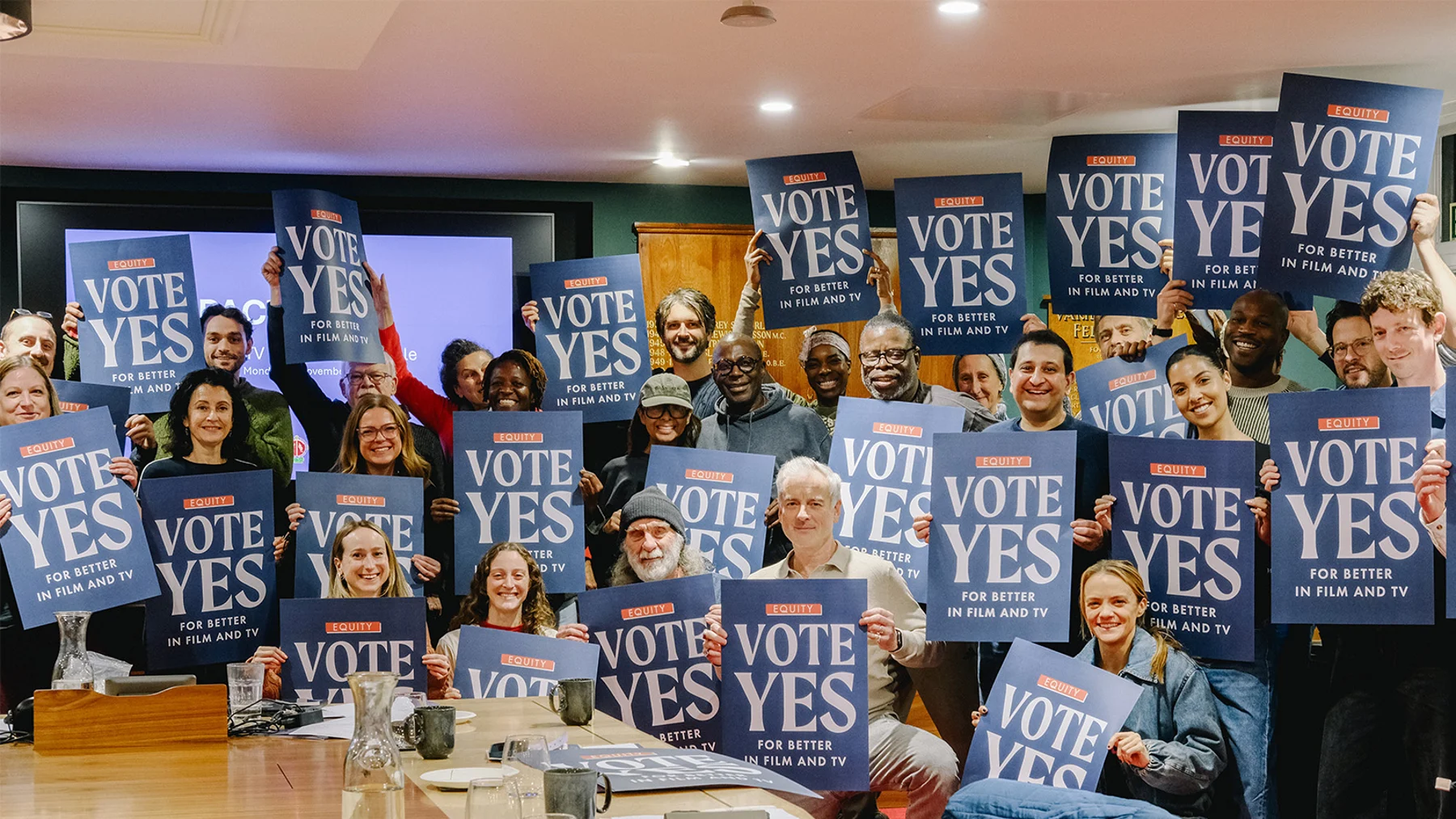
Equity members forced the bosses to accept the first collective AI protections in UK film and television. Nearly 8,000 performers will vote on the deal this fortnight. It’s a victory won through organisation and the threat of industrial action, and the bosses know it.
The union faced down PACT, the producers’ cartel, and won contractual protections over performers’ digital likenesses. This didn’t come from the goodwill of studio executives. It came after Equity members voted 99 percent in favour of industrial action last December, refusing to be scanned on set.
The threat worked. Capital folded.
Let’s be clear about what was at stake. The bosses want to own your face, your voice, your body — scan it once, use it forever, never pay you again. That’s the logic of a system where labour is a cost to be minimised and the worker is a nuisance to be automated away. AI is just the latest weapon the employers reach for to extract more surplus value from the people who actually create their profits.
Performers understood this. They understood that if they didn’t fight now, they’d be replaced by their own digital ghosts, their likenesses owned in perpetuity by corporations who never paid them a penny beyond the initial scan.
The AI protections were only secured after the bosses looked down the barrel of a strike and blinked.
What’s in the deal?
The three-year offer covers pay, use fees, self-tapes, casting, and AI. Almost 8,000 Equity members—actors, dancers, stunt performers, puppeteers, voiceover artists—will vote on whether to accept it. Equity is recommending a yes vote.
On pay, minimum fees on films with budgets over £50m rise 24.1 percent over three years, with 17 percent in the first year. Films between £30m and £50m see a 13.5 percent increase. TV minimum engagement fees rise 9 percent over three years. Production day payments rise 21 percent. Holiday pay jumps 34 percent in year one to bring it in line with statutory regulations. Dance rehearsal rates go up 96 percent over three years.
On use fees, streaming platform residuals get 3 percentage point uplifts. This amounts to a real terms increase of between 16 and 50 percent, depending on how productions are financed, with those on residuals of 6 percent getting the biggest increase to 9 percent. Use periods drop from 15 years to 10, meaning performers get secondary payments sooner.
On casting, self-tapes now come with a minimum 72-hour notice period, excluding weekends and bank holidays, and should be a maximum of six pages. A self-tape is a recorded audition video that a performer films (often at home) and submits to casting directors instead of or before an in-person audition.
There is now also no requirements for readers with self tapes. A “reader” is the person who reads the other character’s lines off-camera while the performer auditions on camera.
On hair and make-up, producers now have a contractual obligation to provide adequate provision for artists of all ethnicities and cultures.
On disabled artists, the agreement requires casting disabled artists in disabled roles, codifying this right for the first time.
There’s more: intimacy coordinators mandated for nudity and simulated sex acts, anti-bullying and harassment principles, formal recognition of puppeteers, sustainability provisions through a Green Rider.
Fleming speaks
Paul W Fleming, Equity general secretary, said: “We set about to radically improve and modernise the terms and conditions for performers across UK TV and film. The result is groundbreaking. We’ve achieved the best AI provisions in the business – protecting performers and ensuring that human performance is valued and prioritised across the industry.”
He continued: “This deal includes pay increases across the board, with fees on the biggest productions better reflecting blockbuster budgets, while working with lower-budget producers to deliver increases and improvements. Meaningful reductions in use periods means performers will receive secondary payments sooner, sharing in the success when shows are sold on or continue to be watched years after their first release.”
On self-tapes, Fleming said: “Equity members told us they were fed up with excessive asks on self-tapes. With this new agreement, casting directors will have to give a minimum of 72 hours’ notice, with a maximum of six pages and no requirements for readers, providing a respectful brief to professional performers who are often balancing portfolio careers and caring responsibilities alongside auditioning for roles.”
On dignity at work: “At the heart of the package are improved provisions on dignity at work. All performers should expect professional and appropriate hair and make-up provisions, and can now point to the provisions requiring them, paying attention to ethnicity and cultural heritage. Disabled artists should be cast in disabled roles, and our new agreement sets this out for the first time. Of significant importance is updated processes and language to give artists better protections and recourse against bullying, sexual harassment or other workplace issues.”
Taking about democracy in the union, he added: “The democratisation of Equity’s negotiating process means this is the first time that all featured artists and stunts get a vote on these new terms. Equity members were fundamental in shaping the claim, voting for potential industrial action to achieve it, and are now able to give the final say on whether to accept these new and improved working conditions.”
The class politics of it
The bosses didn’t hand this over. They fought it. The streaming platforms, the production companies, the PACT cartel — they wanted to scan performers, own their likenesses forever, and pay nothing. That’s not speculation. That’s what the employers do whenever workers let them.
The 99 percent strike vote last December terrified them. It showed what happens when workers stop competing with each other and start acting as a class. The producers faced the prospect of every performer in Britain refusing to work, refusing to be scanned, shutting down productions. That’s worker power.
The deal also shows what union democracy can achieve. Fleming notes that members shaped the claim, voted on industrial action, and now get the final say. That’s not the usual top-down business unionism where officials cut deals behind closed doors. That’s members controlling their own organisation.
None of this means the performers have escaped exploitation. The performers still sell their labour power to employers who extract profit. The AI protections are defensive: they stop the worst abuses, but they don’t change the fundamental relationship where capital owns the means of production and workers sell themselves piece by piece. The bosses will come back. They always do. They’ll look for loopholes, new technologies, new ways to cut costs and squeeze more out of the people who actually make the films and shows they profit from.
The same is true globally. Performers in the US fought similar battles with SAG-AFTRA. The struggle over AI and digital likenesses is international because capital is international. Studios can shoot anywhere, hire anyone, scan anyone. The only counter is international worker solidarity—performers in Britain, America, everywhere, standing together against the same bosses.
The deal is a victory. It should be accepted. But it’s a victory in a war that’s far from over. The employers will regroup. They’ll push back. They’ll try to claw back what they lost. The only way performers can defend this deal—and build on it—is by staying organised, staying militant, and understanding that their interests are fundamentally opposed to the people who own the studios and streaming platforms.
Capital doesn’t give up anything permanently. It retreats, regroups, and attacks again. The performers won this round because they organised and fought. They’ll need to do it again.