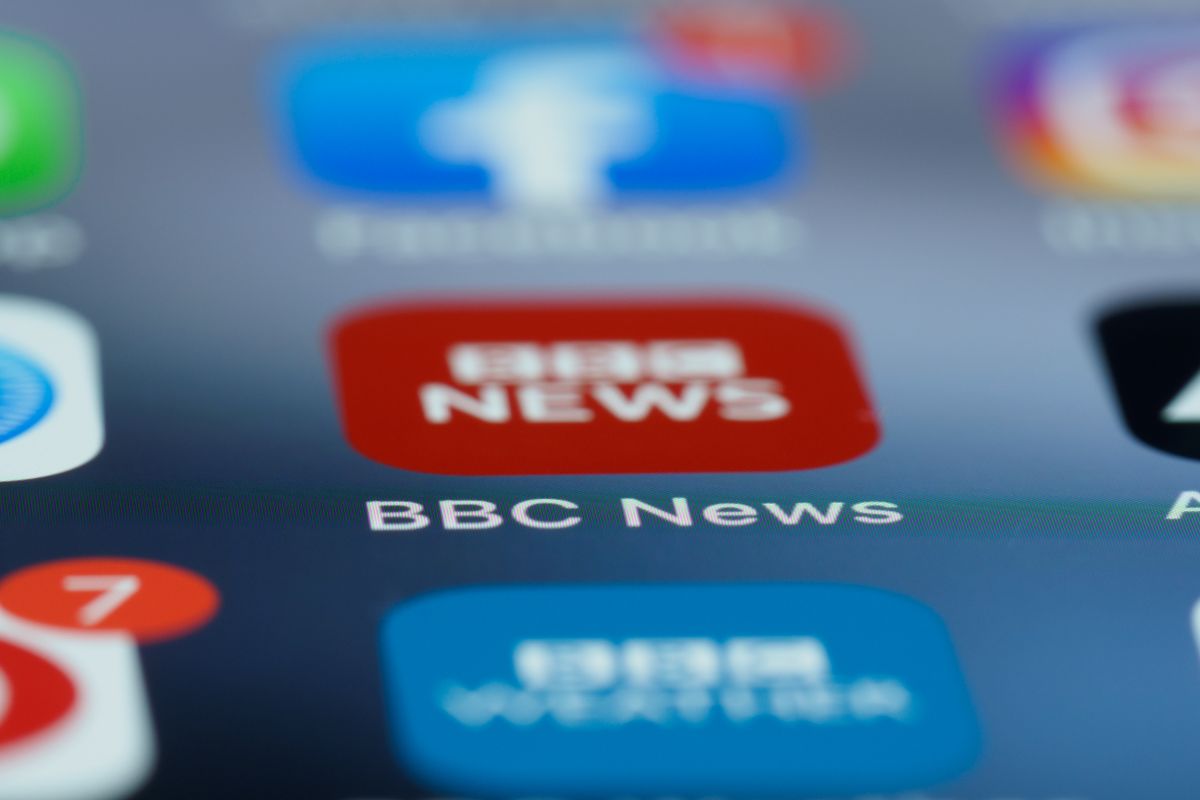
The BBC’s latest Big Boss Interview with Mondelez chief executive Dirk Van de Put offers a useful lesson in how the media manufactures political reality.
The interview repeatedly presses Van de Put on why Mondelez continues operating in Russia after its intervention in Ukraine’s civil war. Given the BBC’s constant framing of Russia as a one-sided aggressor in the conflict, the question isn’t surprising. Large corporations help sustain states through taxation, investment and economic activity. If a company is paying taxes in Russia, it’s understandable to ask whether those taxes contribute to the Russian war effort.
Van de Put himself acknowledged the point, telling the BBC: “We pay taxes in Russia that helps the war. I’m not pleased about that.”
What’s striking isn’t that the question was asked. It’s that similar questions are so rarely asked about other states engaged in wars, occupations and atrocities that enjoy the support of Britain and the wider Western bloc.
Why wasn’t Van de Put asked whether Mondelez is comfortable paying taxes in Israel while Israel carries out what numerous governments, legal scholars and international organisations have described as genocidal actions in Gaza?
Why wasn’t he asked whether company taxes help fund the destruction of hospitals, schools, refugee camps and humanitarian infrastructure?
Why wasn’t he asked about Israel’s repeated attacks on Lebanon and the ethnic cleansing of communities in southern Lebanon?
Why wasn’t he asked whether Mondelez feels any responsibility for contributing tax revenue to a state accused of some of the gravest crimes under international law?
The answer lies not in individual bias but in the structural assumptions of capitalist media.
As Michael Parenti argued in Inventing Reality, media institutions don’t simply tell people what happened. They define which questions are legitimate and which questions are unthinkable. They establish the boundaries of acceptable debate long before an interview begins.
Russia is designated an enemy state by Britain and its allies. Israel is an ally. That distinction shapes the assumptions underlying coverage.
Within that framework, taxes paid in Russia become a matter of moral scrutiny. Taxes paid in Israel become invisible.
The same logic applies to the United States.
The BBC interviewer showed concern that corporate activity in Russia may indirectly support the war in Ukraine. Yet corporations operating in the United States are almost never asked whether their taxes help finance Washington’s military campaigns, drone strikes, sanctions regimes, or support for Israel’s genocide in Gaza.
No chief executive is routinely challenged about whether their business contributes revenue to the US military machine, despite the United States supplying weapons, intelligence and diplomatic cover to Israel throughout the destruction of Gaza.
This isn’t because American or Israeli actions are less deadly. It’s because Western media generally treats violence carried out by allied states as normal, defensive or regrettable necessity, while violence carried out by enemy states is treated as uniquely scandalous.
Parenti described this process as the political construction of reality. Certain victims become highly visible. Others disappear from view. Certain atrocities become headline news. Others become background noise.
The BBC article itself illustrates this pattern. It highlights Ukrainian civilians, damaged factories and the dangers facing Mondelez employees in Ukraine. Those experiences are real and deserve coverage.
But imagine an equivalent interview about operations in Israel.
Would the interviewer ask about Gazan workers killed by Israeli bombs?
Would they ask about hospitals deliberately targeted during military operations?
Would they ask whether executives lose sleep over tax revenues helping fund the destruction of refugee camps?
Would they quote Palestinian representatives demanding corporate withdrawal in the same way the article quotes British politicians calling on Mondelez to leave Russia?
The likely answer is obvious.
This isn’t a conspiracy. It’s how ideological systems function.
Journalists don’t need to receive instructions from governments. They operate within a political culture that divides the world into acceptable and unacceptable violence. The resulting coverage appears balanced because the underlying assumptions remain largely invisible.
Van de Put claimed that Mondelez is trying to be neutral.
“I think over time you try to be neutral in the whole conflict. We’re not trying to take any side.”
In reality, multinational corporations can never be politically neutral. They operate within an imperialist world economy and inevitably become entangled with states, wars and systems of power.
The real question isn’t why Mondelez remains in Russia while paying Russian taxes. The real question is why Western media treats that as an exceptional moral issue while largely ignoring the same relationship between corporations and states aligned with Western imperialism.
The interview tells us less about Mondelez than it does about the ideological framework of the BBC itself.
What matters isn’t only what questions are asked. It’s which questions are never asked at all.