
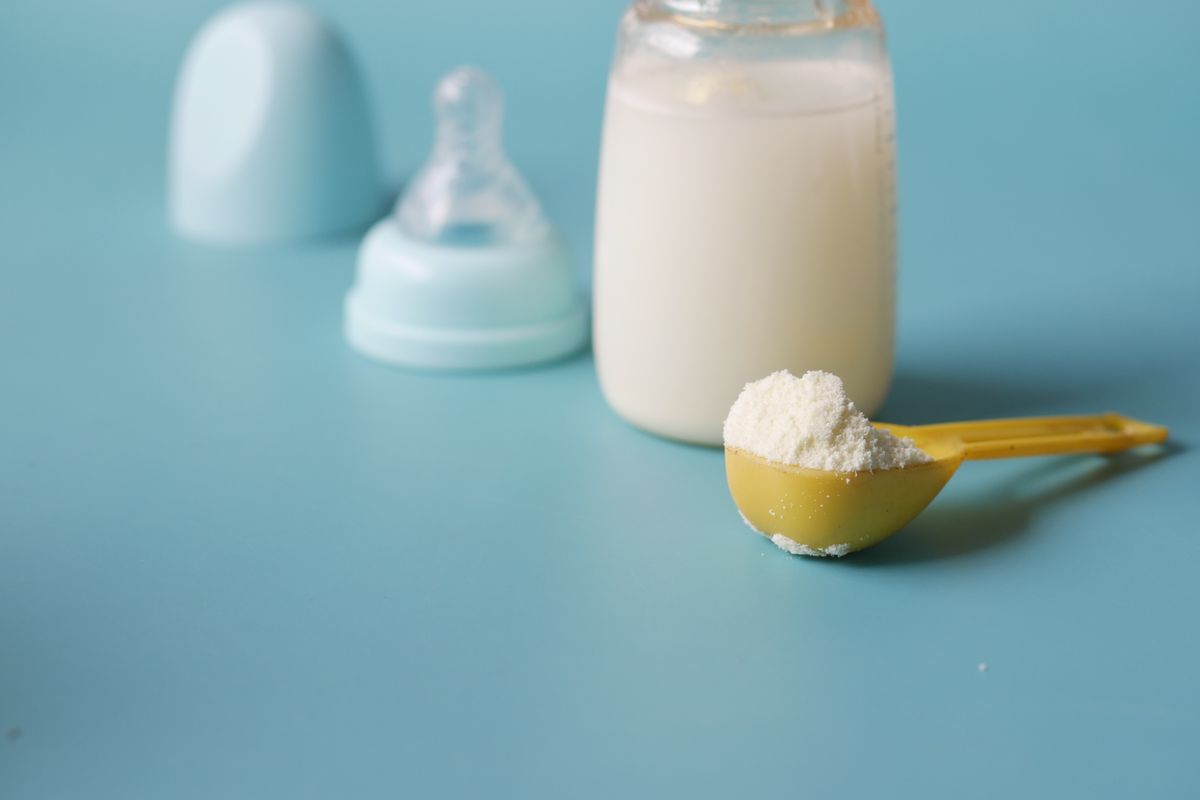
Parents in County Durham are watering down baby formula because they can’t afford to replace it. In one of the world’s richest capitalist countries, families are being forced to gamble with their babies’ health to make a tin of milk last another week.
Megan Sinden, founder of Moorside Baby Bank in Consett, told the BBC that several families had admitted using less formula powder than recommended. They hoped to stretch their supply for another week, “which to me is quite dangerous”.
The medical risks are serious. Infant formula is designed to provide babies with a specific balance of nutrients when their mothers can’t or choose not to breastfeed. Adding extra water reduces the concentration of those nutrients and can also make it harder for a baby’s body to absorb them.
“In turn, this can lead to poor weight gain, growth problems, and developmental delays,” a spokesperson for the National Childbirth Trust said.
“In serious cases, too much water in the formula may lead to more immediate health problems because a baby’s body is not able to safely process the excess water.”
These parents aren’t ignorant of their children’s needs. They’re responding to the brutal arithmetic imposed on working-class households: there’s only so much money, while food, heating, rent, nappies and transport all have to be paid for. Under capitalism, even the most basic requirements of life appear as commodities. A baby doesn’t simply need milk. Its parents need enough money to buy milk at a price set by businesses operating for profit.
A Competition and Markets Authority report found that the average retail price of some infant formula had increased by more than 25 peecin recent years. Sinden has called for a cap on formula prices.
“It’s not a luxury item, it’s a basic need for a baby,” she said.
But capitalism doesn’t distinguish between luxuries and necessities in the way working people do. To capital, both are opportunities for accumulation. The fact that a product is essential only guarantees that people will be desperate to obtain it.
This is monopoly capitalism showing its real face. Lenin explained that monopoly isn’t an accidental distortion of capitalism but the direction in which the system develops. Production and distribution become concentrated in fewer hands, while the basic decisions governing social life remain subordinate to private profit. Even in the wealthy centre of an imperialist system, enormous productive capacity exists alongside families who can’t safely feed their babies.
The burden is then pushed back onto working-class communities. Moorside Baby Bank opened in February 2025 and has already helped 226 families with clothes, nappies, wipes and other necessities, most of them donated by local people. But the bank struggles to receive donations of formula “because it is so expensive” and has to use grants to buy it.
This is working-class solidarity, but it also exposes the priorities of the capitalist state. Ordinary people are expected to collect donations and organise emergency relief while the market continues turning infant nutrition into a source of revenue. The working class is made to rescue itself from conditions it didn’t create.
Some parents have resorted to making baby wipes from kitchen towels. One mother told Sinden that she felt breastfeeding was her only option because she couldn’t afford formula, despite experiencing problems with her baby latching.
Capital shifts the cost of maintaining and raising the next generation onto individual families, and especially onto women. When formula becomes unaffordable, a mother’s body is treated as the free alternative, regardless of pain, difficulty or personal choice. The system depends on this unpaid work while pretending that childcare is a private matter rather than labour necessary for the reproduction of society itself.
Others have been driven even further.
“I’ve heard of people feeling the need to steal baby milk,” Sinden said.
“Obviously I don’t condone stealing, but I really sympathise with any parent that finds themselves in a situation like that.”
Bourgeois morality will condemn the desperate parent who takes a tin of formula while treating the pricing of infant food beyond that parent’s reach as ordinary business. Property is declared sacred; the baby’s need to eat is not. The violence of the market remains respectable because it takes place through prices, tills and empty bank accounts rather than an openly raised fist.
An NCT study found that nearly half of parents, 48 percent, were struggling more financially after having a baby. The charity stressed that formula should always be prepared according to the manufacturer’s instructions.
“For parents who are struggling with the cost of feeding their baby, support is available through their midwife, health visitor, GP, infant feeding team, local family hub or trusted organisations such as NCT.
“We would also reassure parents that they will still meet all their baby’s nutritional needs by buying the lowest price formula.”
Sinden likewise urged families to seek help before their situation becomes critical.
“I really want parents to know that they can come to us before they reach crisis point and to not feel embarrassed or ashamed to have a little helping hand,” she said.
The shame doesn’t belong to parents who need support. It belongs to a social order that possesses the knowledge and productive power to feed every child safely, yet places access to food behind the barrier of private purchasing power. A watered-down bottle isn’t evidence of parental failure. It’s capitalism, concentrated into one bitter image.