
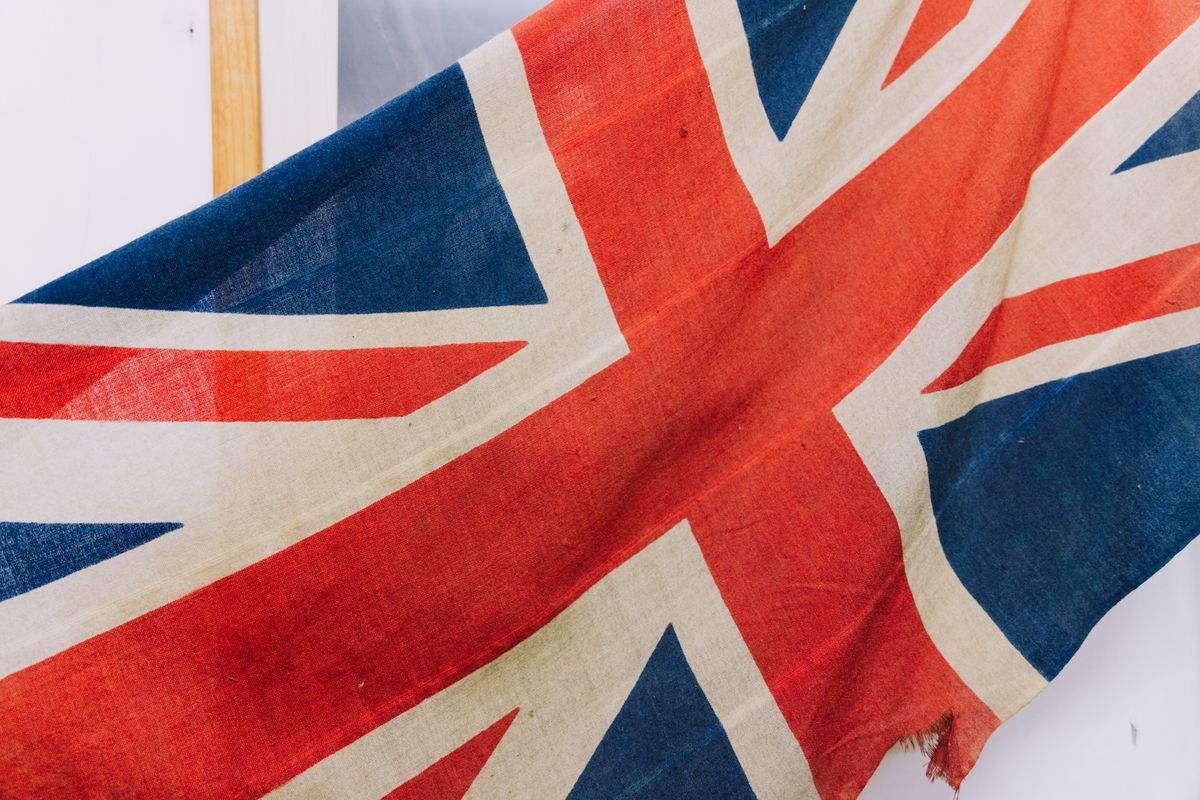
Birmingham city council is seeking an injunction against members of Raise the Colours, the anti-migrant campaign responsible for attaching Union Jacks and St George’s flags to public infrastructure across the city.
The application names the campaign’s co-founder, Ryan Bridge, seven other people and “persons unknown”. The council says it has gathered evidence of harassment, intimidation and attempts to obstruct workers removing unauthorised flags.
Raise the Colours is believed to have begun in Birmingham last summer before developing into a national campaign. Thousands of flags have since appeared on lamp-posts, roundabouts and other publicly owned structures.
The group describes itself as a “grassroots movement for unity and patriotism”. But political movements have to be judged by what they do and the conditions in which they operate, not merely by the friendly words they use to advertise themselves.
A flag doesn’t have one fixed meaning wherever it appears. Context gives it meaning. In this case, the flags are being erected through an organised anti-migrant campaign, often without permission, across shared public spaces in a city where workers have roots throughout the world. Residents have reported confrontations and said the displays are intended to mark territory and intimidate minority ethnic communities.
This is how national chauvinism works. It takes symbols supposedly representing everyone and uses them to divide the working class into those who belong and those who don’t. The Union Jack presents the interests of British workers, landlords, bosses and the imperial state as if they were one and the same. The St George’s flag is similarly used to manufacture a common “English” interest that cuts across class.
There’s no such common interest. Migrant workers aren’t responsible for low wages, insecure housing, gutted services or the prolonged decline of working-class communities. Capitalists and their state are. Patriotism helps bury that class antagonism beneath an invented national unity, directing anger sideways at other workers rather than upwards at the class which owns and rules.
Birmingham residents say officials were warned repeatedly about Raise the Colours. In July, one resident said that community representatives had spent six months meeting the council and West Midlands police and crime commissioner Simon Foster. They supplied statements, photographs and videos concerning incidents and confrontations involving campaign supporters and others.
“We’ve been lobbying the council continuously to remove the flags, and they’ve been really dragging their heels about it,” she said.
The council has now framed its injunction mainly as a matter of highway management, staff safety and the use of public money. That narrow administrative language avoids the political content of the campaign. Council officials can regulate what gets tied to a lamp-post, but treating the issue as a dispute over unauthorised attachments disguises why these particular objects were placed there and why some residents experience them as a threat.
In May, a man was seriously injured in a hit-and-run after a group had gathered to remove flags in Birmingham. Two men were arrested in connection with the incident and later released on bail.
Oxfordshire county council has already secured a permanent High Court injunction preventing flags from being attached to lamp-posts. Justice Dias said council workers and residents had “faced abuse or intimidation while taking flags down, as well as residents”.
Bridge was one of four named people who agreed to stop hanging flags without permission on or near Oxfordshire’s public highways. The Oxfordshire claim also recorded that he had been arrested in April on suspicion of religiously and racially aggravated harassment. He hasn’t been charged and the police investigation remains open.
Bridge pleaded not guilty last week to an unrelated charge of common assault arising from an incident in Brighton in June. He was released on court bail.
Birmingham officials have also been informed that Bridge and several others received 10-year bans from travelling to France. The French interior ministry said “far-right” activists had attempted to prevent migrants from crossing the Channel in small boats.
Raise the Colours said it hadn’t received the Birmingham court papers and therefore couldn’t comment on the application. It rejected “any suggestion that we are seeking to divide communities”.
The organisation also states on its website that it “does not support vigilante behaviour, unauthorised activity, or attempts by individuals to take the law into their own hands.
“Any individual choosing to travel abroad or take physical action does so entirely on their own initiative and without our support, approval or encouragement.”
Formal disclaimers don’t erase the political function of a campaign. Under British capitalism, national symbols carry the history of empire and the present-day division between supposedly deserving citizens and unwanted foreigners. When an anti-migrant movement covers public infrastructure with those symbols, the purpose isn’t politically neutral “pride”. It helps create an atmosphere in which migrant and minority ethnic workers are treated as intruders in their own communities.
The campaign promises “unity”, but it offers only the false unity of the nation: workers bound to their exploiters by a flag while being taught to regard other workers as the enemy. That’s why bourgeois nationalism remains so useful to a ruling class presiding over falling living standards and social decay. It gives working people someone beneath them to blame and calls the resulting division patriotism.