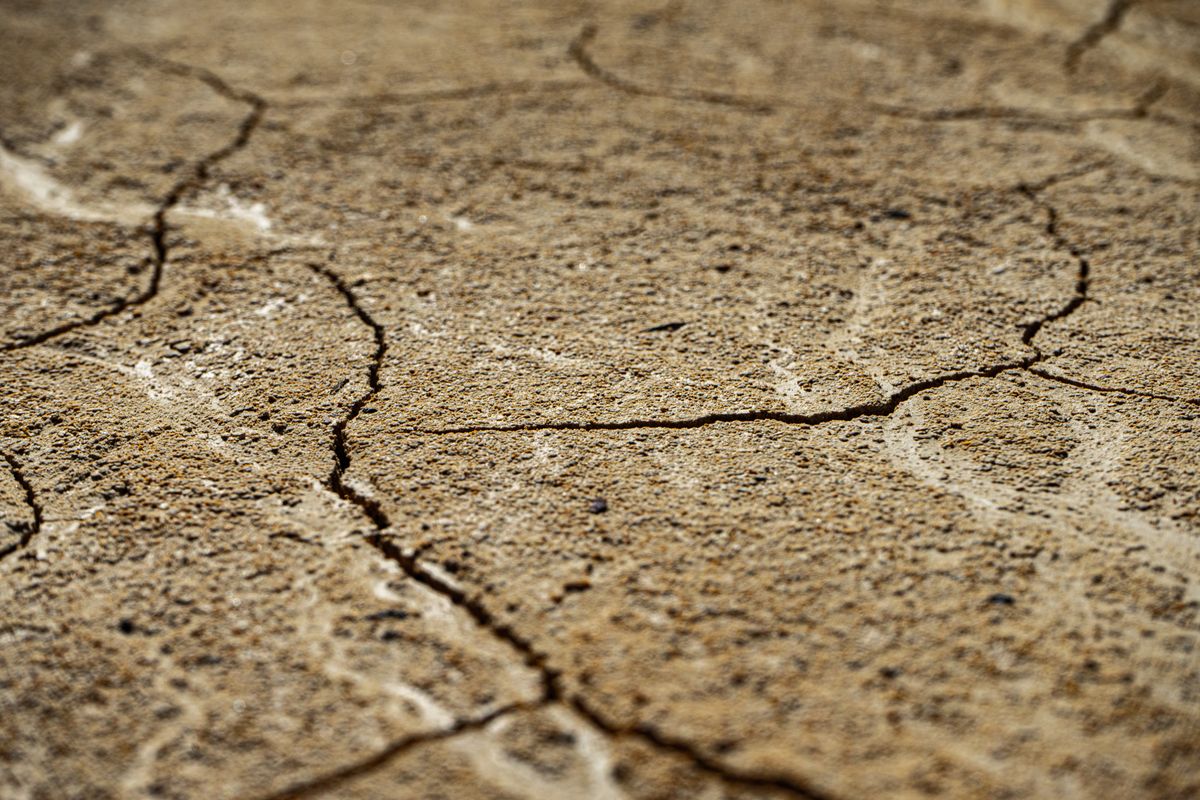
Half of England and the whole of Wales are now officially in drought, after extreme heat and almost nonexistent rainfall left rivers shrinking, crops under threat and vast areas of the country scorched brown.
England received just 7 percent of its usual July rainfall, while southern England received only 1 percent. The Thames at Reading has fallen to its lowest recorded level, parks and protected habitats are drying out, and around 23 million people across England and Wales are under hosepipe bans.
This is the third major drought event in five years. It follows four record-breaking heatwaves since May, which have helped fuel hundreds of wildfires across Britain.
These events are still routinely described as though they were natural disasters happening to society from outside. But the climate crisis isn’t natural. It has been created by a system that puts private accumulation before the conditions needed to sustain human life.
Capitalism has burned through fossil fuels on an enormous scale because coal, oil and gas powered industrial expansion and generated vast profits. The imperialist powers built their wealth through centuries of carbon-intensive development, colonial extraction and the plunder of the rest of the world. The corporations and states responsible knew what continued fossil-fuel use would mean, but profit and geopolitical power came first.
Now the consequences are arriving, and they aren’t being shared equally.
The wealthy can escape overheated homes, install air conditioning, travel elsewhere and absorb higher food and water bills. Workers have to continue travelling to jobs, labouring outdoors, living in badly insulated rented homes and paying whatever price the owners of essential services demand.
The same class that made fortunes from environmentally destructive production is far better protected from the damage than the people whose work created those fortunes.
The Met Office predicts that by 2070 British summers could be between 1C and 6C hotter and up to 60 percent drier than they were in 1990. But as climate scientist Dr Chloe Brimicombe pointed out, this isn’t simply a warning about some distant future.
“This summer has been a compounding of dry weather,” said Brimicombe, “leading to droughts and hot weather and high temperatures leading to heatwaves with these conditions also leading to wildfires. It is a strong indication that we need better long-term planning. Climate change is not a future problem; it’s a challenge for right now.”
The increasingly violent swings between heavy rain and extreme dryness are also making wildfires more likely. Wet weather encourages vegetation to grow, before prolonged heat turns it into dry fuel.
Firefighters responded to 393 wildfires across England and Wales in July, making it their busiest month on record. Hundreds of people have already been evacuated, compared with around 50 during 2025, itself the worst year for wildfires on record at the time.
Cairngorms national park in Scotland has suffered its worst fires in living memory. In north Wales, smoke from fires in the Rhinogydd mountains could be seen from space. North Wales Fire and Rescue Service recorded 48 wild, grassland, woodland and crop fires in June alone, a rise of 47 percent compared with the same month last year.
The pressure placed on firefighters is another example of how the costs of the climate crisis are pushed onto workers and public services. Fire crews are expected to confront worsening disasters with whatever staff and equipment the state considers affordable after years of cuts and restraint.
Capital is allowed to profit from creating the crisis. Public workers are left to contain the flames.
Agriculture is also under growing strain. Farmers across Britain have been forced to harvest crops early, while others fear losing entire harvests as water supplies run down.
At Riverford Organic Farmers in Devon, all but one of the farm’s four reservoirs have already run dry. The business has spent years planning its water use and protecting soil health, but this season has still been one of the hottest and driest it has experienced in four decades.
“Scarcity of water has become a big challenge for us, but what has compounded this has been the heat stress on plants. All but one of our [four] reservoirs have now run dry, which is something we’d never normally expect so early in the season. What we currently have is no longer sufficient,” Luke King, the farm’s supply chain and technical director told The Guardian.
Workers have begun harvesting earlier in the day to limit the danger to both crops and pickers. More labour and resources are also being devoted to irrigation.
“Even with irrigation, you can’t water everything at once,” said King, “so difficult decisions have to be made about prioritising crops and, even with water, if the temperature is too high the water can evaporate very quickly.”
Under capitalism, these growing difficulties won’t simply mean less food. They will be transmitted through the market as higher prices, lost wages and greater insecurity.
Large retailers and food corporations will defend their margins wherever they can. Smaller farmers may be ruined or swallowed by larger businesses. Agricultural workers will face dangerous temperatures and unstable employment. Working-class households, already spending much of their income on rent, electricity and food, will be expected to pay more for basic necessities.
The market won’t distribute scarcity according to need. It will distribute water, food, secure housing and protection according to the ability to pay.
Britain’s water system makes the contradiction especially obvious. Water is an absolute necessity of life, yet in England it is controlled by private monopolies whose purpose is to generate returns for owners and creditors.
The public is told to take shorter showers and stop watering gardens, while decisions about infrastructure and long-term resilience remain shaped by profitability. Workers are encouraged to treat drought as a matter of personal behaviour, even though individuals don’t control reservoirs, supply networks, industrial water use or investment in repairing the system.
This doesn’t mean water should be wasted. It means moral lectures aimed at households hide the real structure of power. A worker with a hosepipe isn’t responsible for organising national water provision. The capitalist class and its state are.
Nor can the crisis be solved by waiting for private investment to become more environmentally responsible. Capital will fund adaptation where it can secure a return. Wealthy neighbourhoods, profitable businesses and valuable property will be protected first. Poor communities will receive emergency measures after the damage has already been done.
Even public green spaces are increasingly kept alive through unpaid labour. In Greenwich, councillor Adel Khaireh praised local residents who have volunteered to water trees and plants.
“We’re particularly grateful to local people such as the network of Friends of Parks groups who help us water trees and plants across the borough, and support our iconic parks on a voluntary basis.”
Their work deserves gratitude, but it also exposes the normal capitalist response to social breakdown. Services are cut, infrastructure deteriorates and the public is then asked to fill the gaps for free.
Ordinary people are expected to donate their time to preserve parks while the owners of capital continue extracting wealth from the labour and natural resources of society.
Britain is still in a much stronger position than many of the countries already being devastated by climate breakdown. The imperialist states accumulated their wealth through fossil-fuelled industry and the exploitation of colonised peoples, yet the worst droughts, crop failures and floods are falling on countries that contributed least to the crisis.
Those countries are then denied the resources needed to adapt. Many remain trapped by debt, unequal trade and foreign ownership, while the rich capitalist powers fortify their borders against people displaced by environmental destruction.
Imperialism therefore shapes both the creation of climate change and the distribution of its consequences. Wealth and resources flow towards the centres of global capital. Heat, hunger, debt and displacement are pushed onto the oppressed nations.
The answer isn’t a more ethical version of the same profit-driven system. Nor is it enough to replace privately owned fossil-fuel companies with privately owned renewable-energy companies while leaving workers to pay the bill.
Meeting the climate crisis requires long-term planning on a scale that capitalism resists. Energy, water, transport, housing and agriculture need to be organised around human survival rather than private returns. Workers must be protected from heat, food and water must be treated as rights, and the cost of the transition must be imposed on the class that owns and profits from destructive production.
The resources exist. What stands in the way is the power of capital.
Britain’s brown fields, shrinking rivers and burning hills are warnings of what happens when the conditions of life are subordinated to profit. Without a struggle for working-class power and socialist planning, the ruling class will continue protecting its wealth while everyone else is left to live with the consequences.