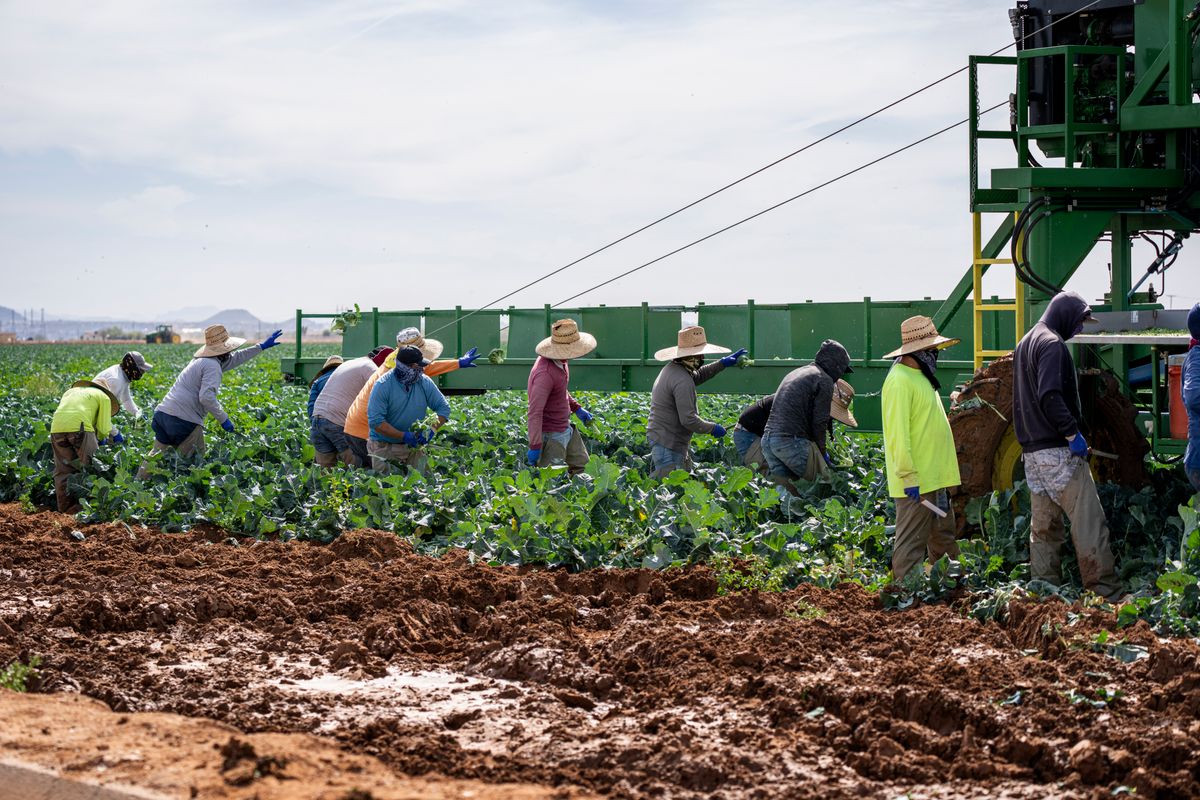
Britain could face its worst harvest on record after months of drought and extreme heat devastated crops across England and Wales. Farmers are warning that working people will be made to pay through higher prices and smaller portions in supermarkets.
England and Wales experienced their driest July since records began 190 years ago, while drought has now been declared across half of England and the whole of Wales. England received just 7 percent of its average rainfall during the month, falling to only 1 percent in southern England. Wales received 8 percent.
The Energy and Climate Intelligence Unit estimates that the UK’s cereals and oilseed harvest could be 2.5 million tonnes below earlier forecasts. Production of barley, oats and rapeseed is expected to fall to 19.5 million tonnes, the lowest level since records began in 1984.
These crops are used to make beer, breakfast cereals and vegetable oil, as well as animal feed. A poor harvest therefore raises costs throughout the food system.
Farmers could lose an estimated £390 million in revenue. But under capitalism, losses don’t remain where they first appear. Supermarkets, food manufacturers and other powerful businesses will protect their profits wherever they can, while the costs are pushed down onto smaller farmers, agricultural workers and consumers.
Tim O’Malley, chairman of Nationwide Produce, said conditions were “as bad as its ever been” and warned that supermarkets could sell smaller vegetables without reducing prices.
“I think we’re going to see shrinkflation,” he told Radio 5 Live’s Wake Up to Money.
“The problem we’re going to have this year is a massive reduction in yield and major quality issues,” O’Malley said.
“We’ve got crop with stress or we’ve got quality issues. So you will see a smaller crop.”
Shrinkflation is one of the ways capital disguises rising prices. The sticker price stays the same, but workers receive less food for their wages. Whether the price rises directly or the product becomes smaller, the result is the same: the cost of feeding a household increases while wages fall further behind.
O’Malley claimed supermarkets would “do everything” to keep prices stable, before admitting that “eventually they will probably have to come to the party and increase the price, particularly if they start importing.”
Supermarkets don’t exist to defend consumers. They exist to make profits. Their decisions over prices, packaging, suppliers and imports are governed by competition and the need to preserve their margins. When harvests fail, the big retailers have far more power than farmers or shoppers to decide who carries the loss.
That power is especially clear in the relationship between supermarket chains and smaller producers. A handful of retail monopolies dominate access to the British food market. They can squeeze suppliers, reject produce that fails cosmetic standards and shift contracts abroad, while presenting the eventual rise in prices as an unavoidable act of nature.
Poor domestic harvests have already led retailers to import produce that would normally be grown in Britain during the summer.
“We’re importing broccoli and iceberg [lettuce] from Spain at this time of year, which in August [is] unheard of. I think we’re going to see more of that, unfortunately,” O’Malley said.
Imports can temporarily fill gaps in supply, but they don’t solve the underlying crisis. Climate change doesn’t stop at Britain’s borders. Spain and other major food-producing countries are also being hit by extreme heat, drought and water shortages.
The imperialist countries have built a global food system in which production is organised around profit, international trade and the demands of wealthy markets rather than the secure provision of food. When domestic production falls, richer states and corporations can use their purchasing power to draw food from elsewhere. Poorer countries and poorer sections of the working class are left more exposed to shortages and rising prices.
This is one reason the climate crisis can’t be understood simply as a British farming problem. The countries and corporations that became rich through centuries of colonial plunder and fossil-fuelled industrial development retain the greatest ability to protect themselves from the immediate consequences. The worst suffering is pushed onto workers, small farmers and oppressed nations that contributed least to the crisis.
British agriculture is becoming increasingly unstable. Farmers faced disastrous harvests in each of the previous two years, and many had hoped that stronger crops at the beginning of spring would finally bring some relief.
Tom Lancaster, a land, food and farming analyst at the ECIU, said: “At the start of spring farmers were hopeful of a better year, but the dry April and July and record-breaking heat have left farmers facing down the barrel of a third awful harvest in a row.
“Farming is now the sector most exposed to climate change and the risks and damage that it brings.”
Martin Lines, a Cambridgeshire farmer and head of the Nature Friendly Farming Network, described the harvest as “a real kick in the teeth”.
“After two terrible harvests in a row, the crops this year were looking good and full of potential coming out of spring, only for months of drought and heatwaves to destroy any prospect of a decent harvest,” he said.
“I’ve never known it this dry and hot on our farm.
“Even farmers I know who were sceptical of climate change are now saying they’re really worried about the future of their businesses and production, it’s just been completely brutal for our industry.”
Farmers normally rely on stored winter rainfall and water drawn from rivers, streams and underground sources to sustain crops and livestock through the summer. But low rainfall has reduced the water available, while repeated heatwaves have increased evaporation and placed further pressure on already depleted rivers.
These conditions will become more common as the climate warms. Yet the capitalist class continues to treat climate stability, water, land and food as resources to be exploited for private accumulation.
The problem isn’t that capitalism has failed to notice climate change. Governments and corporations have understood the danger for decades. The problem is that meaningful action conflicts with the short-term interests of fossil-fuel companies, banks, landlords, agribusiness and the other sections of capital that dominate economic life.
Capitalist states can announce targets, subsidise selected businesses and encourage consumers to make different choices. What they can’t do is place human need above profit without attacking the property and power of the capitalist class itself.
The coming harvest failure shows what that contradiction means in practice. Crops are destroyed, smaller farmers face ruin, food workers remain poorly paid and families receive less at the checkout. Meanwhile, the monopolies controlling the food system use their market power to preserve their position.
Climate change is no longer a distant warning. It’s already reshaping the food supply and raising the cost of survival. Unless production is taken out of the hands of capital and organised through socialist planning, each new drought, flood and heatwave will become another opportunity for the ruling class to protect its wealth by making workers pay.