
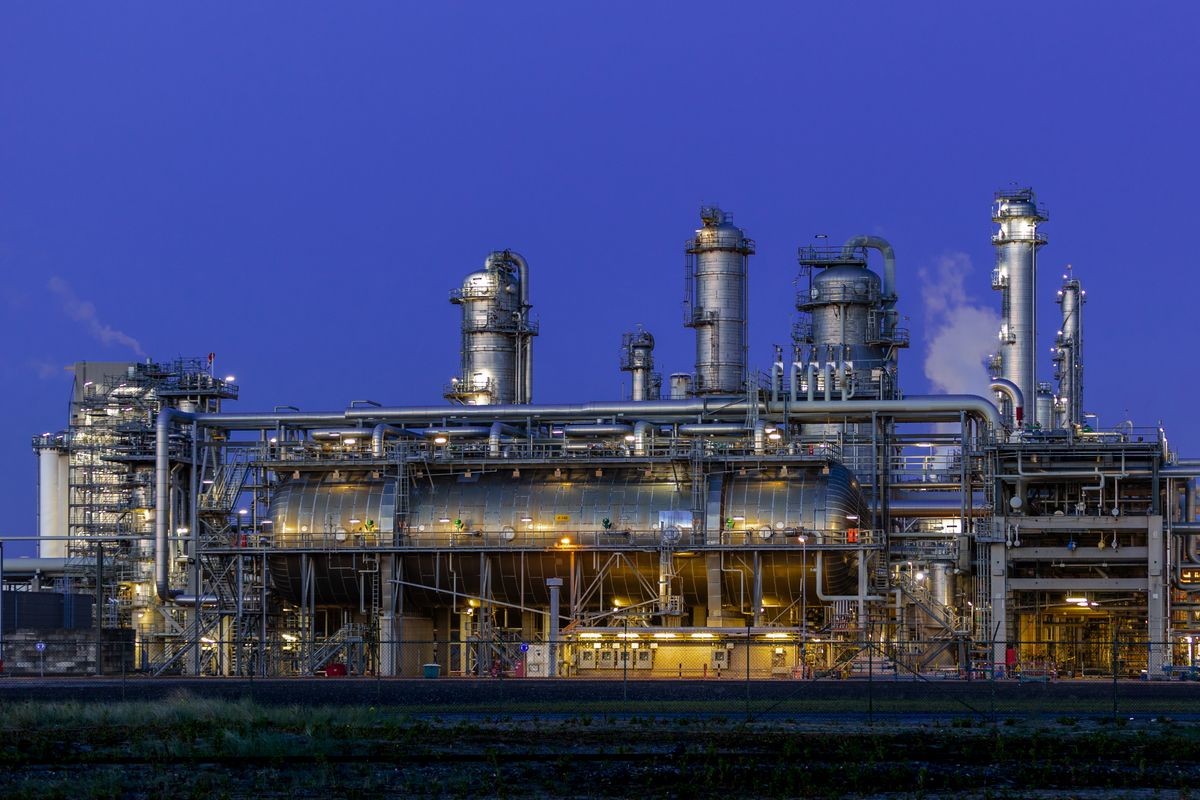
The US has overtaken China in the construction of new gas-fired power generation as its technology monopolies scramble to build the infrastructure needed for artificial intelligence.
According to a new report from Global Energy Monitor, the US is now building twice as much gas-fired capacity as China — a country of 1.4 billion people, or over four times the US population — and more than any other country in the world. The amount under construction rose by 76 percent during the first half of this year.
When announced and pre-construction projects are included, planned US capacity is nearly three times that of any other country. Since January, gas generation in development has risen from 252GW to 378GW, around a third of the global total. Building it all would expand the existing US gas fleet by roughly two-thirds and require more than $647bn in investment.
Around half of this proposed capacity is directly linked to new datacenters. Google, OpenAI, Amazon, Elon Musk’s xAI and other technology companies are engaged in a frantic race to dominate AI, regardless of the resources consumed in the process.
This is capitalist competition in its normal form. Each company must expand before its rivals do, secure electricity before its rivals can and turn computing power into private property. The outcome isn’t rational planning but a chaotic duplication of infrastructure on a colossal scale. What makes sense to each capitalist separately produces catastrophe when repeated across the whole economy.
“Six months ago, China had more gas plants under construction but that has now flipped,” said Jenny Martos, a project manager at Global Energy Monitor.
“There has been an enormous surge in datacenter proposals powered by gas in the past year and the climate implications of that is huge. Building all of this gas for AI locks in decades of pollution and it is also locking in dependence on a volatile fuel cost, which will get passed down to rate payers.”
That last point captures the class arrangement neatly. The datacenters, algorithms and profits belong to private corporations. The higher electricity bills, water shortages and pollution are handed to the public. Capital gets the asset while workers get the costs.
Using gas rather than renewable energy to power the datacenter boom could raise emissions from the US electricity sector by as much as 20%. Even that hasn’t slowed construction. Demand for efficient gas turbines has created such a large backlog that some companies, including xAI, have switched to smaller and more heavily polluting turbines.
The requirements of accumulation take priority over even the limited environmental safeguards permitted by the US state. The Trump administration has scrapped environmental reviews to accelerate construction, while governors are being encouraged to hand AI companies further tax cuts. Public authorities are being ordered to surrender tax income, water and energy so a small group of monopolies can strengthen their control over a strategically important technology.
This race also forms part of the wider imperialist competition between the US and China. Washington treats advanced computing as an instrument of economic, military and political power. Its ruling class therefore regards any limit on AI expansion as a potential advantage for China. Climate policy becomes expendable when it conflicts with the struggle to maintain US dominance.
Trump has repeatedly used China’s emissions as an excuse for expanding fossil-fuel production at home. He has complained that “their air is dirty, and it drifts over to us”. Yet China’s rapid construction of clean-energy capacity, combined with the US gas boom, is exposing this propaganda. The International Energy Agency now expects US spending on coal- and gas-fired power stations to exceed China’s for the first time in decades.
There’s growing resistance in the towns expected to host this infrastructure. Two-thirds of more than 800 planned datacenters are in areas already affected by drought. Residents face competition for water, rising power bills and environmental damage while corporations receive tax breaks. Three-quarters of Americans surveyed by Heatmap said they wouldn’t want to live beside a datacenter. Dozens of cities and counties have introduced restrictions, while New York imposed a temporary ban on permits and construction for new hyperscale facilities in July.
Trump’s answer has been to tell communities that others will take the investment if they refuse it.
“Frankly, communities that don’t take a datacenter, they’re making a mistake because there’s plenty of communities that want them,” he said.
“Because it means jobs, and it means tremendous tax revenue coming into the towns and cities that take them.”
This is the supposed freedom offered by monopoly capital: accept the pollution, resource depletion and corporate demands, or watch investment go elsewhere. Communities are made to compete against one another while the technology monopolies dictate the terms. The US state isn’t losing control of the AI boom. It’s doing what a capitalist state exists to do: clearing away every obstacle standing between monopoly capital and another field of accumulation.