
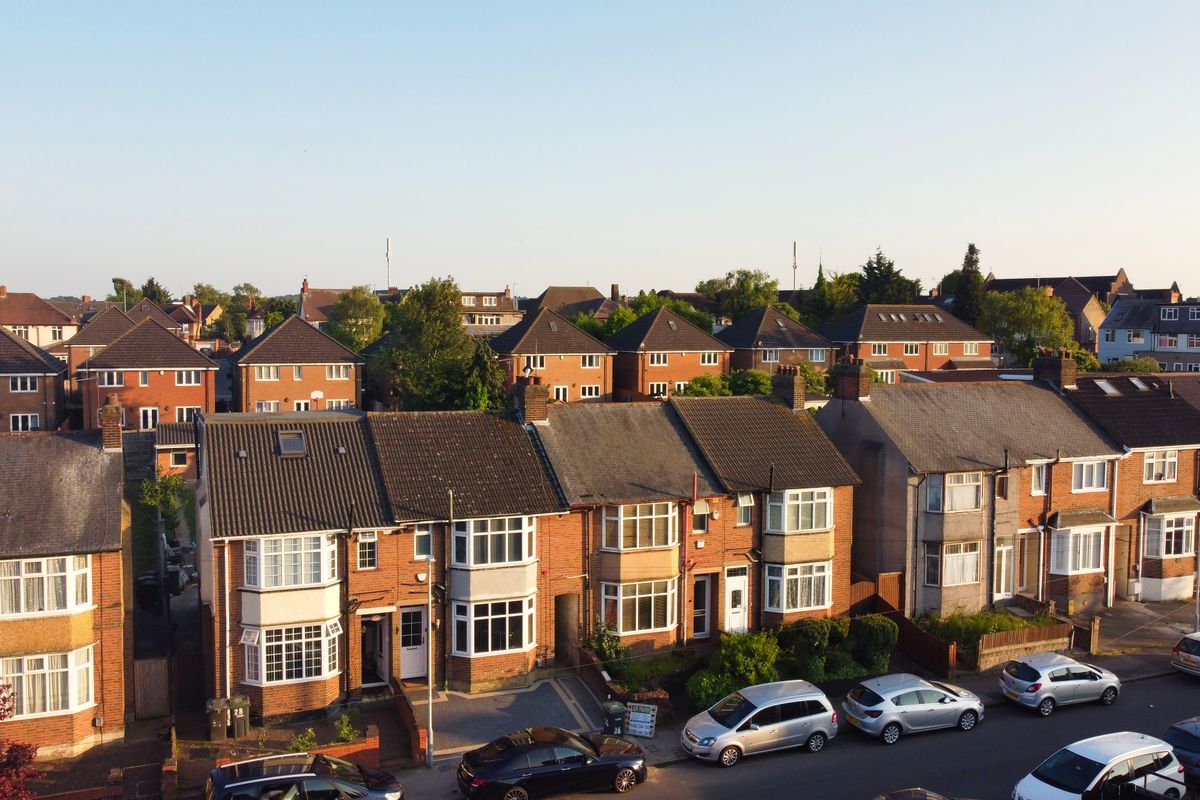
Labour has announced where more than 70,000 social and “affordable” homes will be built over the next decade, allocating almost £10 billion across Greater Manchester, the West Midlands, West Yorkshire, South Yorkshire, North East England and Liverpool. A further £6 billion has already been announced for London, although ministers haven’t said how many homes that will provide.
The allocation forms the first stage of Labour’s £39 billion housing programme, which is supposed to produce 300,000 social and affordable homes over ten years.
These large headline figures shrink quickly when spread across a decade. The entire programme amounts to an average of 30,000 homes a year, only some of which will be available for social rent. Housing organisations estimate that England needs at least 90,000 new social rented homes every year just to meet demand.
Of the homes announced on Monday, 60 percent will be for social rent. That means roughly 42,000 genuinely low-rent homes across the six regions over ten years, before later allocations are taken into account.
“Affordable housing” is a deliberately broad category. It includes social rent, but also more expensive rented homes and shared ownership schemes. These market-dependent forms of housing are grouped together with social rent so ministers can inflate the apparent scale of public provision.
Before becoming prime minister, Andy Burnham called for the entire £39 billion budget to be spent on homes for social rent, which generally costs tenants around half the market rate. That commitment has already been watered down.
Housing minister Matthew Pennycook denied Burnham had broken his promise. He said the government had taken a “pragmatic approach” because it wanted to “get money out the door”. More than £16 billion remains to be allocated outside London and, according to Pennycook, this will prioritise “social rented homes but also council homes”.
A priority isn’t a target, however, and the government still hasn’t said how many homes will be owned by councils and how many will be provided by housing associations. Angela Rayner said ministers were “doing everything we can to get councils building once again”, with councils being offered extra money and access to longer-term funding arrangements.
In the 1950s, councils were building almost 200,000 homes a year. Today, half of English councils don’t own or build housing at all. Only slightly more than 12,000 homes for social rent were completed in 2024–25.
This collapse wasn’t caused by a shortage of construction knowledge or material capacity. Council housing was dismantled through decades of privatisation, sell-offs, austerity and reliance on private developers. Homes were increasingly treated as financial assets, while secure public housing was presented as an expensive burden.
That’s how housing works under capitalism. Workers need homes for their use as somewhere safe and stable to live. Landlords, banks and property developers approach housing looking for the rent, interest and profit it can produce. Chronic shortage raises rents and land values, benefiting those who already own property while making workers compete for whatever remains.
Britain’s position at the centre of imperial finance hasn’t provided security for its own working class. Instead, land and housing have become major stores of wealth for capital. Public spending on homes is subjected to endless fiscal objections while the incomes and asset values of landlords, banks and developers are treated as untouchable.
The human cost can be seen in the record number of homeless families confined to temporary accommodation. Government figures suggest that 177,530 children are now homeless and living in temporary housing.
Natasha, a 22-year-old mother in Milton Keynes, spent the final months of her pregnancy and the first weeks of her son Zayd’s life living in a hotel. Her room became infested with ants, and she now shares a kitchen with around 60 other residents. Visitors aren’t permitted, preventing friends and relatives from helping her care for her five-week-old baby.
“I’m just scared when he gets older, when he starts crawling around, I can’t even allow him to crawl in such a place like that because it’s so dirty,” she told the BBC.
Natasha described the hotel as feeling “like a prison”.
“I just want somewhere peaceful for him and calm. Somewhere nice where I can bring him up,” she said.
She is one of 1.34 million households on social housing waiting lists. For families like hers, the distinction between social rent and vaguely defined “affordable” housing isn’t technical. It determines whether a home is actually within reach.
Shelter called the announcement a “significant improvement”, but said it was “not near the level we need to truly tackle that backlog and end homelessness”. The charity wants the government to state how many social rented homes it will deliver each year.
Labour’s wider promise to build 1.5 million homes by 2029 is also falling behind. Around 203,000 homes were delivered in England during the year ending June 2026. Meeting the target would require at least 300,000 annually.
The Conservatives have attacked the programme as an “unfunded spending commitment”. Shadow housing secretary James Cleverly complained that social rent is more expensive for the government and claimed that some homes won’t have to be completed until 2039.
Social rent is “more expensive” only from the standpoint of a state determined to preserve private profit. It costs the government more because tenants pay less. For workers, that’s precisely the point.
The Conservatives and Reform UK have instead tried to blame migrants for the shortage. The Conservatives claim that excluding foreign nationals from social housing would “free up” 228,144 homes for “British families”, while Reform says British-born workers under 35 should receive priority.
Neither policy would build a single home. This is the usual function of national chauvinism: a shortage produced by capitalist policy is blamed on another section of the working class. Workers are encouraged to fight over an inadequate supply while landlords, developers and banks disappear from view. Shelter has pointed out that strict eligibility rules already exist and that neither proposal addresses the cause of the shortage.
The new social homes will make an enormous difference to those who eventually receive them. But Labour’s programme still accepts permanent scarcity as its starting point. Its “pragmatic approach” means easing some of the worst suffering without confronting the property relations responsible for it. For the 1.34 million households already waiting, the shortage remains built into the plan.